Zoppi Cristina, Monferrato

| Country & Region | Italy, Monferrato |
| Producer | Cristina Zoppi and Ezio Chiara |
| Founded | 1991 |
| Website | www.zoppicristina.it |
Cristina Zoppi and Ezio Chiara met while working for a small company that supplied parts for Fiat. In 1991 they decided to start a life in agriculture and moved to Ezio’s family farm, located northeast of Asti in the zone of Monferrato. Here, in the commune of Viarigi in a hilltop hamlet named Pergatti Collina, Ezio’s family raised its own animals and had a small business raising crops, including vines. Cristina joined in the family work full-time while Ezio stayed on the job with the Fiat company, lending a hand on weekends. The dream was always to have their own label with their own wine.
As Ezio’s father grew older, he proposed that Cristina take the helm of her own business. He had taught her everything he knew of viticulture, which he in turn had learned from his father, and he was ready to retire. Specific vineyard parcels were bequeathed to her and papers were drawn up: the legal name became Azienda Agricola Zoppi Cristina.
Over the years, she and Ezio cobbled together other parcels while raising a family (one son in 1996 and another in 2001). One of those parcels grew around an ancient Roman chapel that stood on the pinnacle of a hill. Above the side entrance was a porthole window with three circles, which Cristina and Ezio took to symbolize the heart, mind, and spirit.

Early this century they reached their zenith: 15 hectares or 37 acres in various parcels surrounded by forest and hazelnut orchards. From then on, they concentrated on getting the vineyards in shape as they farmed sustainably and sold the crop to the local co-op. In 2010 they went organic and acquired certification in 2013. It always hurt to see the grapes that they took such care to cultivate going to the co-op, but it was necessary for cash flow.
In 2016, they teamed up with a neighboring winery to take a portion of these grapes to make their own wine, realizing their dream after setting out twenty-five years earlier. Consequently, the next year Ezio quit the Fiat company to go full-time at the farm.
It was during these years that Federico Russo approached Cristina to see about buying some of her organic grapes. He was the winemaker at his family winery of Crotin in Monferrato. Federico worked with the acclaimed enologist Cristiano Garella, and on a subsequent visit Federico brought Garella, who quickly saw the potential that Zoppi’s sandy white calcareous hillside vineyards offered for wines of focus and finesse. One thing led to another and from the 2018 vintage onward, the wines have been made at Crotin under the watchful eyes of Federico and Cristiano Garella.
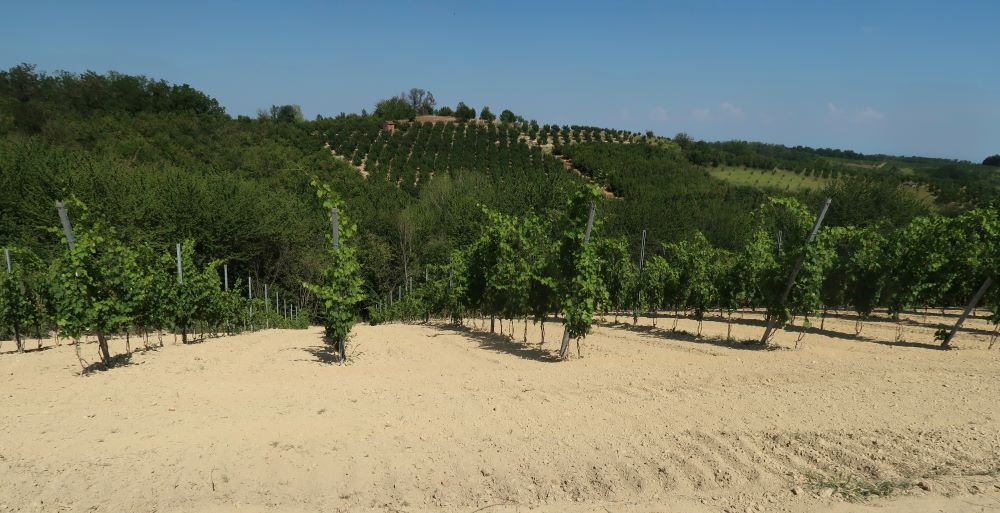
All grapes are hand-harvested and de-stemmed, and all ferments are allowed to happen spontaneously. The main varieties are raised in stainless steel while the Nebbiolo is raised in second and third passage 500L barrels. Their 15 hectares (pictured above are their Ruchè vines) break down into:
8 of Barbera
4 of Ruchè
3 of Grignolino
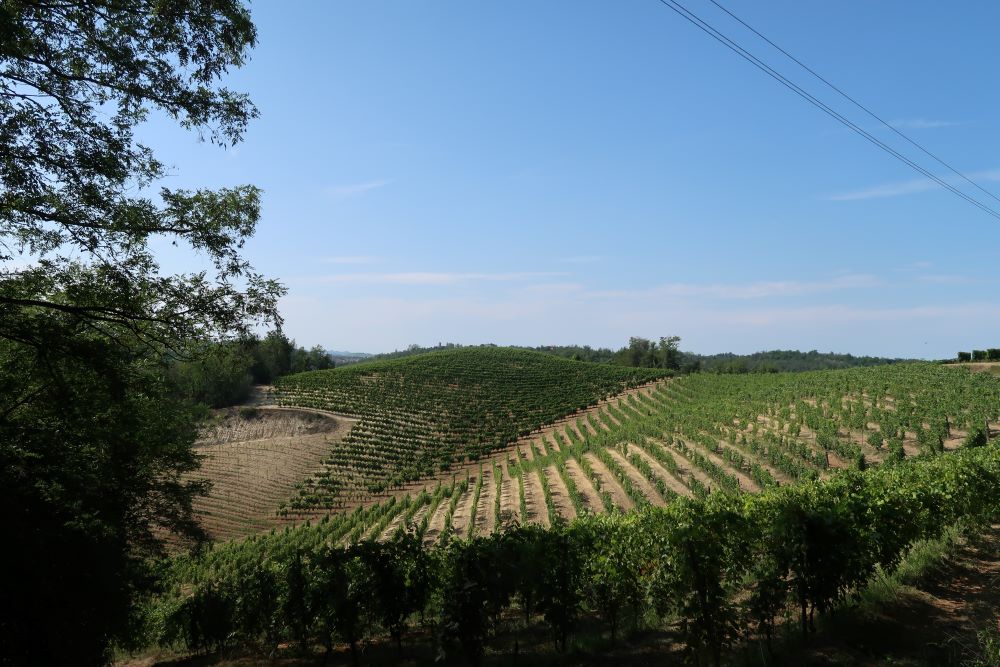
In addition, they have a small parcel of less than half an hectare of Nebbiolo. Along with vines, Cristina and Ezio also tend 15 hectares of hazelnuts organically.

The Wines
| Wine | Blend | Description |
|---|---|---|
| Grignolino d'Asti DOC | Grignolino | An adored native, despite the fact that it's difficult to cultivate (the Piemontese are nothing if not stubborn), Grignolino traces its history back to at least the 13th century in Piedmont. If it wasn't born in Monferrato, it certainly grew up there. Some credit the name to grignole, which refers to grape seeds in the Asti dialect, and Grignolino certainly does have a high ratio of seeds to pulp. Others point to grigné, the local word for smile. The vines for this wine grow at an average of 285 meters in altitude, and the wine ages for around 12 months in steel following spontaneous ferments. Deceptively light in color--it can even be confused for rosé--Zoppi's rendition jumps with bright, almost alpine aromatics imbued with florals, sage and peppercorn. It's a delightfully red-fruited wine full of punchy acidity and vibrant tannins. It begs for a light chill. It can age surprisingly well in a good cellar. 400 cases on average. Tech sheet here. |
| Barbera d'Asti DOCG | Barbera | Another adored Piedmont native that excels in the Monferrato hills, making for a wine that is especially darkly colored with mouthwatering acidity and low tannins. The vines for this grow at an average of 500 meters in altitude, and the wine ages for around 18 months in steel following spontaneous ferments. Zoppi’s rendition offers a bloody, meaty nose, a serious mouthful of vivacious fruit, and great value. 1,500 cases on average. Tech sheet here. |
| Ruchè di Castognole Monferrato DOCG | Ruchè | Yet another local favorite, one that nearly went extinct in the last century (one census showed only 46 hectares existing in all of Monferrato in 2000!). The DOCG of Castognole Monferrato was created in 2010 and is limited to seven communes. Zoppi’s vines grow at an average of 280 meters in altitude, and the wine ages for around 12 months in steel following spontaneous ferments. This rarity is intensely aromatic, with strong notes of roses, violets, lavender; the color is deep; and the fruit is rich with plum and vibrant acidity, finishing with savory notes. 800 cases on average. Tech sheet here. |
| Monferrato Nebbiolo DOC | Nebbiolo | From 0.4 hectares or 1 acre of vines growing at an average of 285 meters in altitude and aged for around 18 months in older 500L barrels and then six months in concrete following spontaneous ferments. Zoppi’s rendition is closer to Barbaresco’s meaty mid-range than it is to Alto Piedmont’s racy high tones, but it does land somewhere in between. 80 cases on average. Tech sheet here. |