Domaine Merlin-Cherrier, Sancerre (Bué)
| Country & Region | France, Loire Valley |
| Appellation(s) | Sancerre |
| Producer | Agathe Merlin & Clément Rigot |
| Founded | 1982; Agathe is the 5th generation to farm these vines |
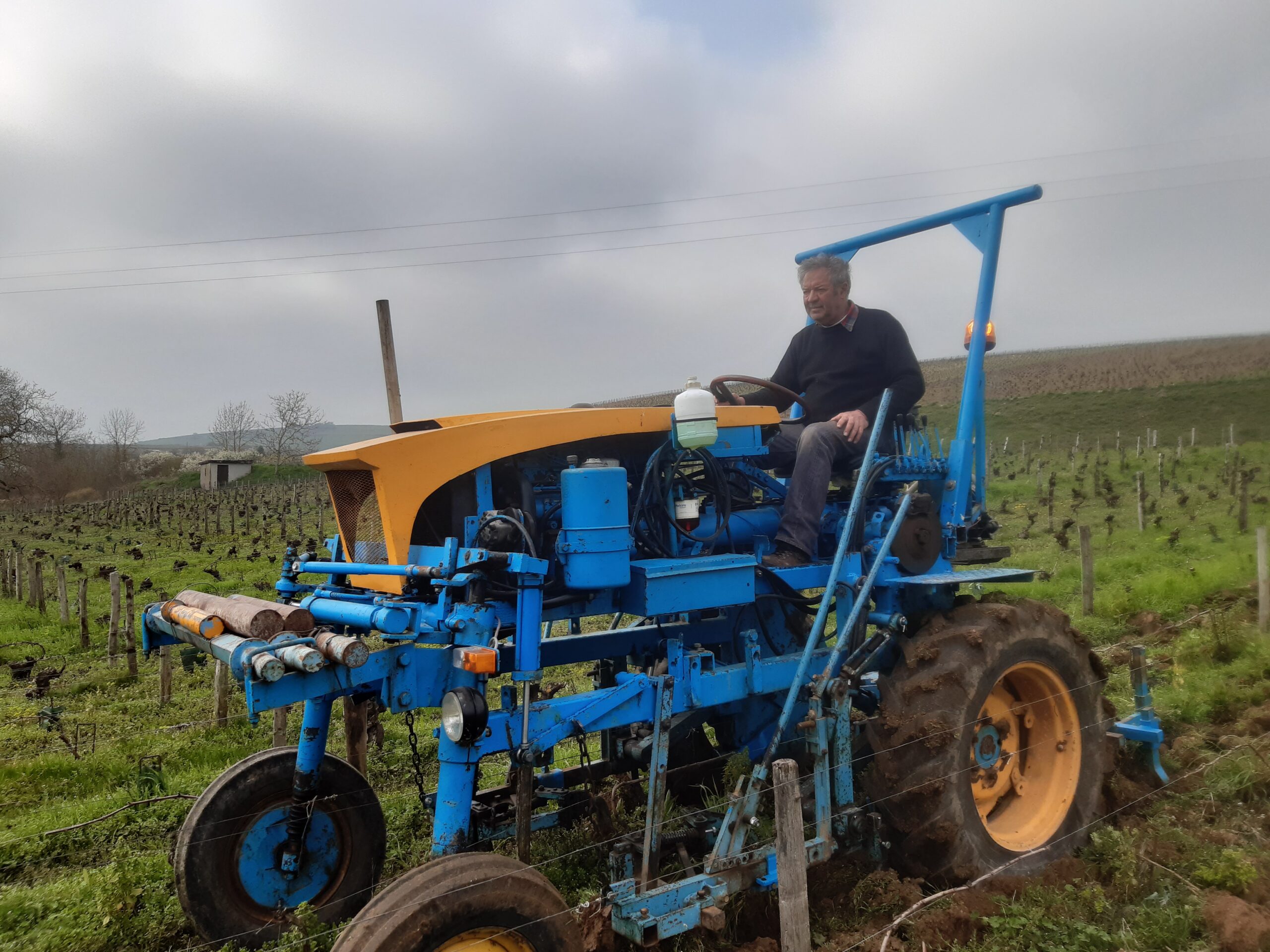
Thierry Merlin was the first producer we started life with as a company in 1997. A man of Bué who reveled in driving a WWII Willy’s Jeep up and down the hills and dales of Sancerre, he was a remarkably consistent and committed grower up until the day he handed the reins over to his daughter Agathe in 2021.
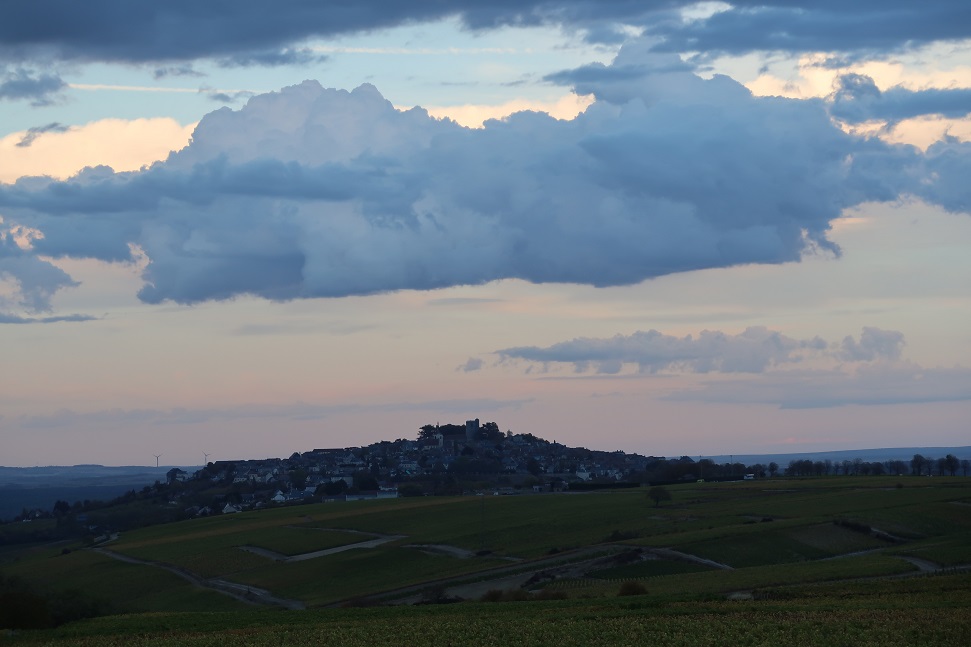
Bué is a village packed full of growers in a pocket canyon, surrounded steeply on three sides by vines, a hamlet just to the west of the old, formerly fortified hilltop town of Sancerre. Once a Huguenot stronghold, Sancerre lorded over the Loire and was sacked in the 16th and again in the 17th century during the Wars of Religion. At its highest point still rises a 15th century tower, the last of Sancerre’s fortifications, and if the name—Porte-César—of one of the original gates to the town is to be believed, Caesar and his legions were once here.
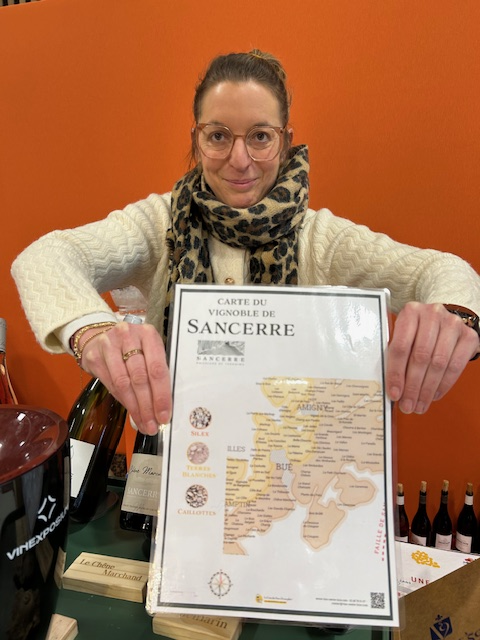
Bué and 13 other communes surround this venerable river guardian, and Bué is notable for having one of Sancerre’s truly great vineyard sites: Chêne Marchand, arguably the finest example of caillottes terroir in the appellation. Caillottes, a.k.a. Oxfordian limestone, is one of two main soil types in Sancerre. The name refers to stones and it’s a very stony, compact chalk without a lot of clay or marl that predominates in Bué. It’s known for making younger drinking Sancerres, wines with broad aromatics and elegant profiles.
The other main soil type is terres blanches, or Kimmeridgian limestone, so named because in dry periods the soil can turn white from its intensely calcareous makeup. It’s a younger soil type, full of clay marls, it’s generally found higher on the hills, typically layered over caillottes, and it’s concentrated along the western arc of the appellation. Terres blanches make for powerful, pointed wines that need a couple of years of bottle age to really show their stuff.
The third main soil type is silex, or flint, which is pretty much confined to a north-south fault line running right through the town of Sancerre.
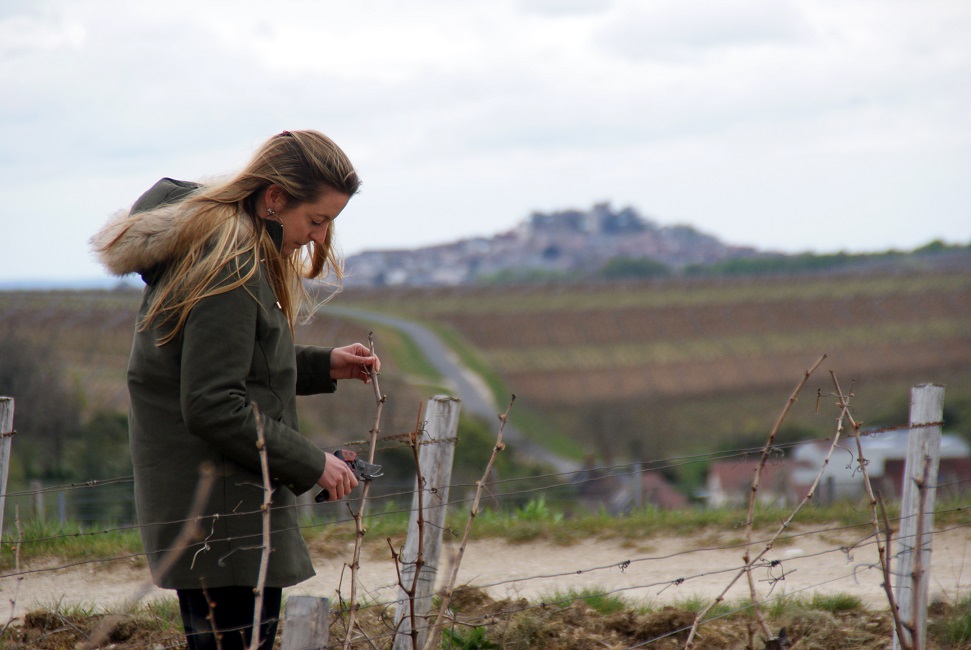
Thierry’s daughter Agathe took over the family domaine with her husband, Clément Rigot, after completing their winemaking and viticulture studies. They work thirty parcels totaling 32 acres (to be 30 come 2026, when a lease on a parcel runs out), all in Bué except for three just over the line in the commune of Sancerre and one to the south in Veaugues. Most are planted to Sauvignon; two, 4.5 acres’ worth, are planted to Pinot Noir.
Among the first things they did was to invest in a new cooling system to better control the temperatures of all the tanks, a state of the art pump (admittedly a prosaic improvement, but this pump reduces oxygenation by up to 5x compared to older pumps), and new vessels: a 220hl foudre for the cuvée Grand Chemarin, a 20hl oak upright for the Pinot Noir ferments, amphora for the cuvée Chêne Marchand, plus new steel tanks and a concrete vat for extended aging of the classic white, and 300L barrels for the aging of rosé and red.
In 2023 they very much dialed back on extractions and pump-overs with the Pinot Noir, aiming to make a wine with much purer, brighter fruit and with more elegance.
In 2024 they harvested all of the Pinot Noir by hand as well as the single-vineyard plots, and this is the practice going forward. No herbicides or pesticides are used, and cover crops between rows are sown.
The Wines
| Wine | Blend | Description |
|---|---|---|
| Sancerre blanc | Sauvignon Blanc | The classic wine from this producer reflects Bué’s chalky terroir beautifully with its paradoxical generous precision (concentrated elegance might be a better way of saying this). This is a blend of parcels from both soil types (with caillottes predominating) totaling just under 30 acres. Ferments are initiated with neutral organic yeast and élevage takes place in steel and concrete with lees stirring. First bottling is at nine months; last is at eighteen months. Minimal to no filtration and only a small dose of SO2. Production averages 6,000 cases in a normal year. Tech sheet here. |
| Sancerre rouge | Pinot Noir | This comes from two parcels Thierry planted with his father in 1964 and 1988 (when he was very young and when he was not) with sélection massale vines from Irancy. The parcels total just under four acres in the heavy clays of Les Rimbardes, a site east of Bué near the border of Sancerre. The wine ferments spontaneously in a large oak upright, followed by élevage in that upright along with 300 and 600L barrels and a portion in steel. Production averages 650 cases in a normal year. Tech sheet here |
| Sancerre Chêne Marchand | Sauvignon Blanc | Chêne Marchand is one of the crown jewel vineyards of Sancerre and is the appellation’s outstanding example of Caillottes terroir. If ever Sancerre were to classify its vineyards, Chêne would be a certain candidate for grand cru status. The vineyard grows on the western plateau above Bué where the sun always shines if it is shining anywhere in the neighborhood, and this plateau has supported vines for many a century—possibly as far back as the Roman Occupation. There are higher hills immediately to the north in Bué where the terres blanches are; the mound-like Chêne Marchand comes off of them. The name translates as wood merchant and one story has it that wine merchants conducted their business with growers under an oak tree that grew in the vineyard in the Middle Ages. Much more likely, it's a variation on Choix du Marchand, or choice of merchant, coming from the 18th and 19th centuries when the wine of Chêne Marchand was usually the top pick of the wines of Bué by that era's professionals. Chêne, by this account, refers to a path or route, a path that led discerning merchants to wine coming from Bué's most famous vineyard. Agathe and Clément have two parcels in Chêne Marchand that total 0.84 hectares, or two acres (the entirety of Chêne is 30 hectares and makes up 10% of Bué's total surface of vines). The smaller parcel belonged to her great-grandfather, and was worn out by the time her father Thierry inherited it. He ripped up the diseased vines and planted various grasses and grains to replenish and aerate the soil, and he did this every year for an astonishing ten years. Today this parcel grows the domaine’s best vines. Production averages 500 cases in a normal year. The wine from these two parcels is fermented in steel and amphora, and élevage goes for around sixteen months with lees stirring. Bottled without filtration, it’s an immensely elegant, long, and mineral Sancerre. In riper years, the wine can be exotic with notes of white flowers, hazelnuts, and honey; in leaner years the minerality and length carry the day. Tech sheet here |
| Sancerre Grand Chemarin | Sauvignon Blanc | The domaine has long tended vines in the Grand Chemarin lieu-dit, but they had always gone into the classic cuvée. This changed in 2018 when Thierry held out a portion of the crop to vinify separately. The vines are divided among four parcels totaling three acres, with a third planted in 1990 and two-thirds in 2008. The site shares key similarities with Chêne Marchand, Bué's other emblematic vineyard: it's on a plateau, facing more or less south, and the soil is essentially caillottes. Grand Chemarin, however, has much thinner topsoil, and it's composed more of what they call griottes, or pebbles, rather than rocks. Plus, the plateau is notably higher than the Chêne Marchand hilltop, which it faces across the Bué hollow (Chêne's to the west; Chemarin's to the east, high above the Merlin household and cellar). Fermentation and élevage are different too: Grand Chemarin ferments spontaneously in drier years, and half is raised in 20HL foudre plus 228L barrels and vat. No filtration prior to bottling, which happens 18 months after aging. Production averages 600 cases in a normal year. Tech sheet here |