La Closerie des Lys, Limoux
| Country & Region | France, Languedoc |
| Appellation(s) | Limoux |
| Producer | Jean-Luc Terrier and Christian Collovray |
| Founded | 1997 |
The unique feature here [Closerie des Lys] is the combination of Mediterranean and Atlantic climatic influences, giving the wines a refreshing quality. The altitude of the plots varies between 200 and 600 meters, benefiting from different types of soil and microclimates. The estate is currently in the process of converting to organic farming.
—Birte Jantzen, jebdunnuck.com, October 2025
Roughly 50 miles south of the old walled town of Carcassonne are the vineyards of Closerie des Lys. They grow deep in the Pyrenean foothills on the sides of two mountains, flanking a little hollow anchored by the village of Antugnac. The village is old and forgotten, with a church that was fortified in the Middle Ages as a bastide against marauding mercenary bands, but few travelers venture off the main road to climb the hill to visit Antugnac and its church.
The lowest vines sit at 650 feet; the highest look out at 1,950 feet. Mostly they face south, such as the mature Chardonnay parcels in the photo below (those are the Pyrenees in the distance). The lowest parcel, planted in 2003 to Syrah, has the deepest vein of clay and is the most protected from the region’s buffeting winds, and in 2018 for the first time Closerie bottled wine from this site as the domaine’s first 100% Syrah. For some, its aromatics are chock full of the northern Rhone’s bacon and violets; for others, it speaks of intense central Loire Cab Franc. The site is Closerie’s warmest, but there’s no doubt about it being a cool-climate wine.

The reigning appellation here is Limoux, Languedoc’s coolest appellation in the south and the only AOP for Chardonnay. Christian Collovray and Jean-Luc Terrier, childhood friends and producers in Mâcon, well understood this in 1997 when they came in search of vineyards. They wanted to expand their business and property prices were good in the south, but what clinched the deal for them was that Closerie’s vines were in Limoux’s Haute Vallée de l’Aude—the coolest zone of all, a narrow band following the Aude River from Limoux to Quillan—and it had some of Languedoc’s original plantings of Pinot Noir from the 1970s. Those vines have since been replanted, but they showed what was possible.
Below are some of Closerie’s Pinot Noir vines, facing south and east.

The partners quickly understood that the location offered mountain freshness—the diurnal shifts are remarkable here—tempered by Languedoc’s sun. Indeed, they discovered that the Chardonnay vines high up on the slopes followed the same ripening cycle as their vines at Domaine des Deux Roches in the Mâconnais, which surprised them more than a little.
In 1997 Closerie had 112 acres of vines. In 2002 the partners embarked on replanting three-quarters of the existing vines while adding new parcels, all with high-density plantings. Today Closerie has nearly 250 acres with 13 varieties (Cab Franc, Chardonnay, Chenin, Cinsault, Grenache, Malbec, Mauzac, Merlot, Muscat, Pinot Noir, Sauvignon blanc, Sorelli and Syrah). The vines give yields of 35-40 hectoliters per hectare, well below the maximum permissible (which are 48 for red and 50 for white).
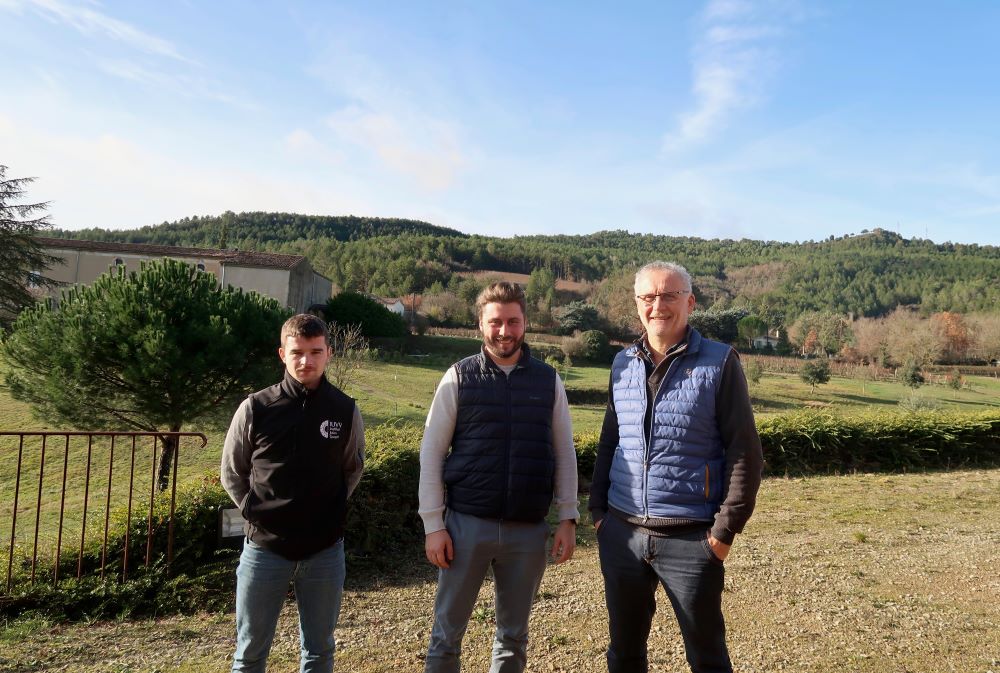
All of these vines and their wines are overseen by Jean-Luc Terrier’s son Pierre-Alexis and his enologist Pierre Strodes. Pierre is a local and is the son of the original enologist for Jean-Luc and Christian in the early days of Closerie. In the photo above is Pierre, Pierre-Alexis, and Jean-Luc to the right.
In 2021 the boys went organic in the vines and expect to be certified entirely by 2025. In the cellar, they start most ferments with neutral organic yeast (except for the Pinot Noir, which is normally let run with spontaneous ferments because its naturally high acidity keeps any bad yeasts at bay). All wines are moved by gravity, and SO2 additions have been reduced (the first happens post-malo).
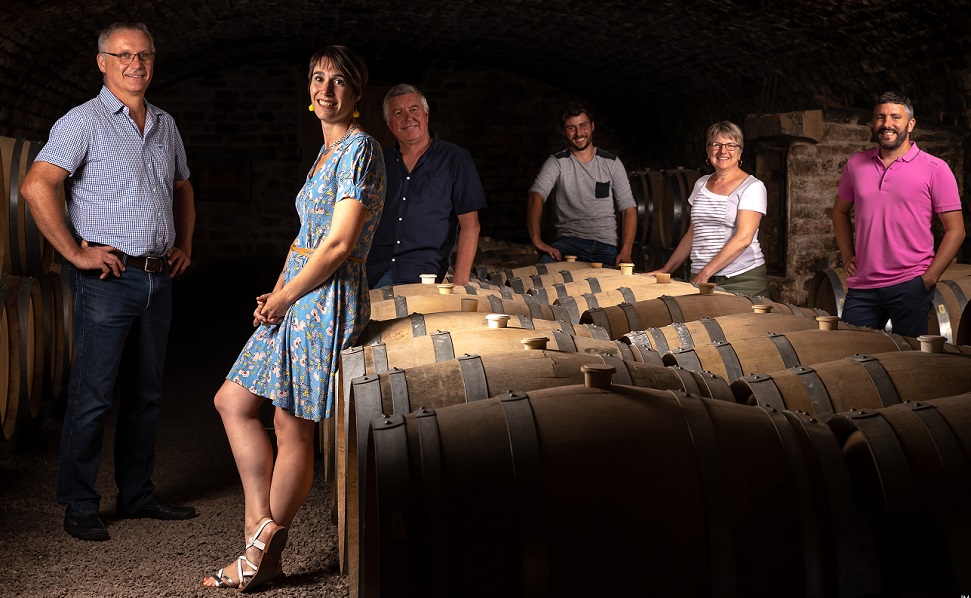
Two generations of Terriers and Collovrays:
The Wines
| Wine | Blend | Description |
|---|---|---|
| Crémant de Limoux Brut | Chardonnay 60%, Chenin Blanc 30%, Mauzac 5% and Pinot Noir 5% | This comes from Closerie’s highest vines. The wine rests on its lees in tank for 12 months before bottling with a dosage of 7 grams, which gives body but not sweetness to the wine. The nose is complex, with all manner of floral notes, and the wine never loses its refreshing drive. 400 cases annually. Tech sheet here. |
| Les Fruitières Blanc | Equal parts Chardonnay and Mauzac, with 10% each of Chenin Blanc and Sauvignon added | As with most of these wines, this is fermented with neutral organic yeasts. It's raised in steel on its fine lees until February after the harvest. They’re fond of saying at Closerie that it’s all about a Mediterranean climate with mountain influence, and you get that in this wine’s toothsome ripeness and underpinning acidity (and this undergoes malo!). The price/quality ratio is unbeatable. 4,200 cases annually. Tech sheet here. |
| Les Fruitières Rosé | Syrah 60%, Grenache 20% and Malbec 20% | This wine comes mainly from red parcels highest in elevation and thus with excellent acidity. It has exceptional freshness and can evolve in the bottle for several years. Like its siblings, this offers great value. 6,500 cases annually. Tech sheet here. |
| Les Fruitières Rouge | Based on Merlot with around 5% each of Cabernet Franc and Syrah | Like most of the grapes at Closerie, these are harvested by machine in the early morning hours, and undergo fermentation de-stemmed but not crushed in steel (the weight of fruit in the tank gently crushes the grapes). 6,000 cases annually. Tech sheet here. |
| Chardonnay | Chardonnay | From Limoux, however, with its cool hills, Chardonnay turns into something altogether different, a wine with a pulse, a wine with dimension. So wrote Tamlyn Currin in an article on Languedoc on Jancis Robinson's site, and it sums up this wine perfectly. This is unoaked mountain Chardonnay at its best, lifted, fresh and delicious. The majority of the wine undergoes full malo. Chardonnay is Closerie's most important variety, with some 120 acres planted. 8,300 cases annually. Tech sheet here. |
| Pinot Noir | Pinot Noir | High altitude Pinot Noir vines facing south and east. De-stemmed but not crushed prior to fermentation, and half the wine is raised in steel while the other half undergoes its élevage in wood (10% new). As with most of the ferments at Closerie, there are two-three days of cold soaking followed by fermentation. Most cuvees are started with neutral yeast (no genetic modifications or flavor additions), but the Pinot normally is left to ferment spontaneously. The wine is bottled in February-March following harvest. 3,300 cases annually. Tech sheet here. |
| Syrah | Syrah | First bottled as a varietal in 2018 from a parcel planted in 2003 in Closerie’s warmest and most clay-rich site. A wine that brims with character and cool-climate defiance, and a remarkable value. 400 cases annually. Tech sheet here. |