Hugo & Pauline Villa, Saint Joseph
| Country & Region | France, Rhône Valley |
| Appellation(s) | Condrieu, Crozes Hermitage, IGP, Saint Joseph and Vin de France |
| Producer | Hugo & Pauline Villa |
| Founded | 2022 |
| Website | hpvilla.fr/en/accueil-english/ |
Hugo and Pauline Villa grew up immersed in wine culture in the northern Rhône village of Chavanay. Grower Pierre-Jean Villa was their father and his world became theirs, albeit with a tweak: while they followed in his footsteps, they consciously embarked on making wines reflective of their generation. Theirs emphasize camaraderie, joy and drinkability—bistro wines, they say, in contrast to Dad’s more serious and stern stuff meant for the cellar and fine tablecloths.
It started with Syrah, the northern Rhône’s iconic variety: how to define it? They had a parcel planted in the 1970s in the hills of Saint-Julien-en-Saint-Alban, down at the southern end of the northern Rhône, and they elected to make a crisp, open style of Syrah, one that was more “chill” than their father’s renditions (and that does indeed benefit from a chill!). Thus was born their cuvée Histoire des Gosses, or story of the kids.
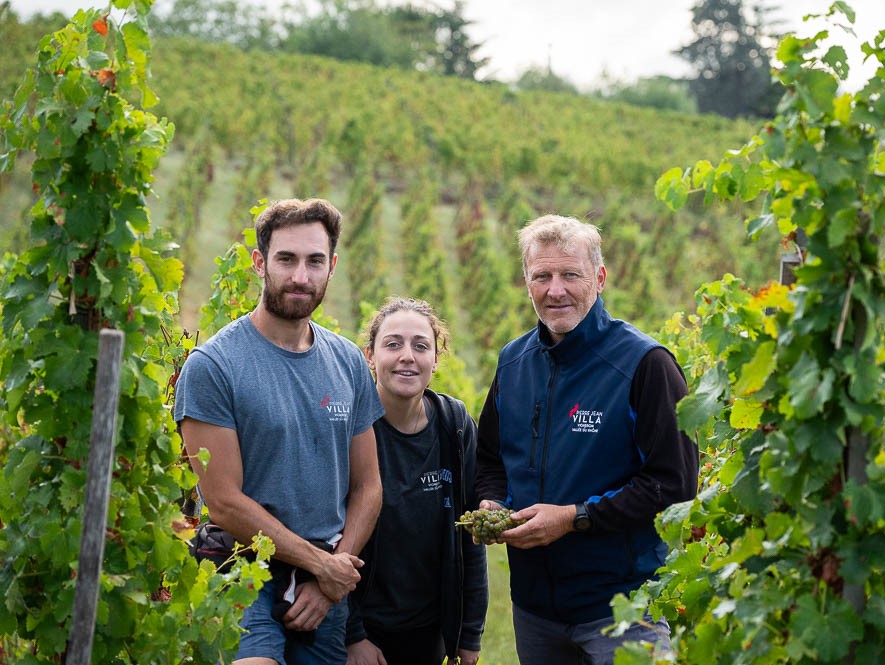
Next came a decision with one little plot of vines in the center of the long St Joe appellation, up on the plateau in Ardoix, planted to Syrah, Gamay and Viognier. Pierre-Jean had recently acquired this plot, planted in the 1990s and pruned ever since with haphazard discipline, and he was going to rip out the vines to replant entirely with Syrah. But it was a plot he had already determined to give to his kids, and when he told them of his plan they said hang on, that’s a bit severe. They wanted to prune those mature vines carefully, harvest the whole plot at once, and co-ferment the grapes to see what might come of it. This didn’t accord with PJ’s way of thinking, but he was smart enough to back off. In this manner came about the cuvée Chemin de la Croisette, or a path in the road.
And so it went, parcel by parcel—for the vines played a role in these decisions as much as Hugo and Pauline’s own proclivities. Nowadays they work with a total of eight hectares, or just about 20 acres. Of those hectares, two they own, two they rent long term, and from four they buy grapes farmed by people they know. Their debut vintage was 2022.
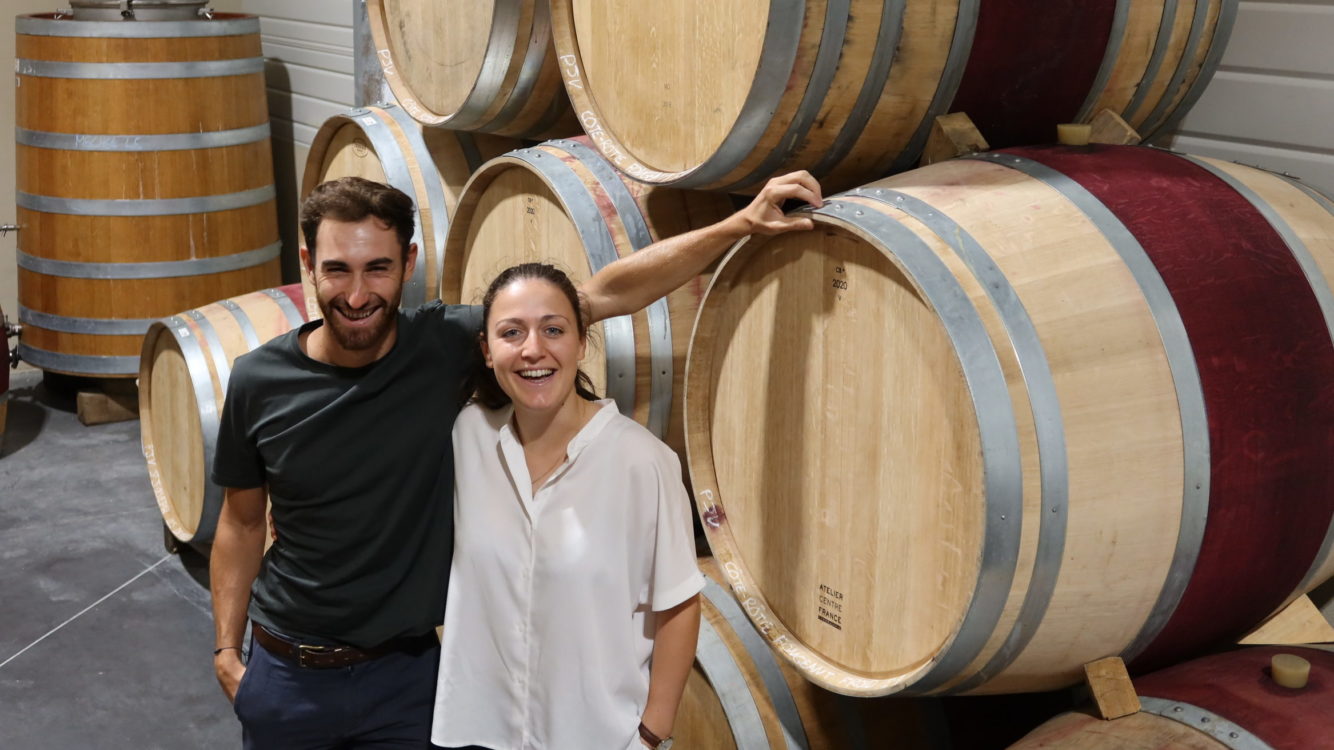
Hugo, the eldest, did studies in winemaking and viticulture, and went on to do internships in Burgundy and in Terrasses du Larzac (at Domaine Pas de L’Escalette) before joining his father at the domaine just prior to the pandemic. Pauline studied commerce in Lyon and then Dijon for international trade of wine and spirits, followed by a two-year stint in a wine store in Vienne.
The wines are made in a new winery in Chavanay, designed by their father. It’s where he makes his own wines under the label of Pierre-Jean Villa. It has a state of the art screw press, a temperature-controlled grape reception room, various types of fermenters, plus a chilled barrel room full of all manner of aging vessels. Like dad, Pauline and Hugo are focused on farming without pesticides, herbicides or synthetic fungicides, and in developing agroforestry within their parcels.
The Wines
| Wine | Blend | Description |
|---|---|---|
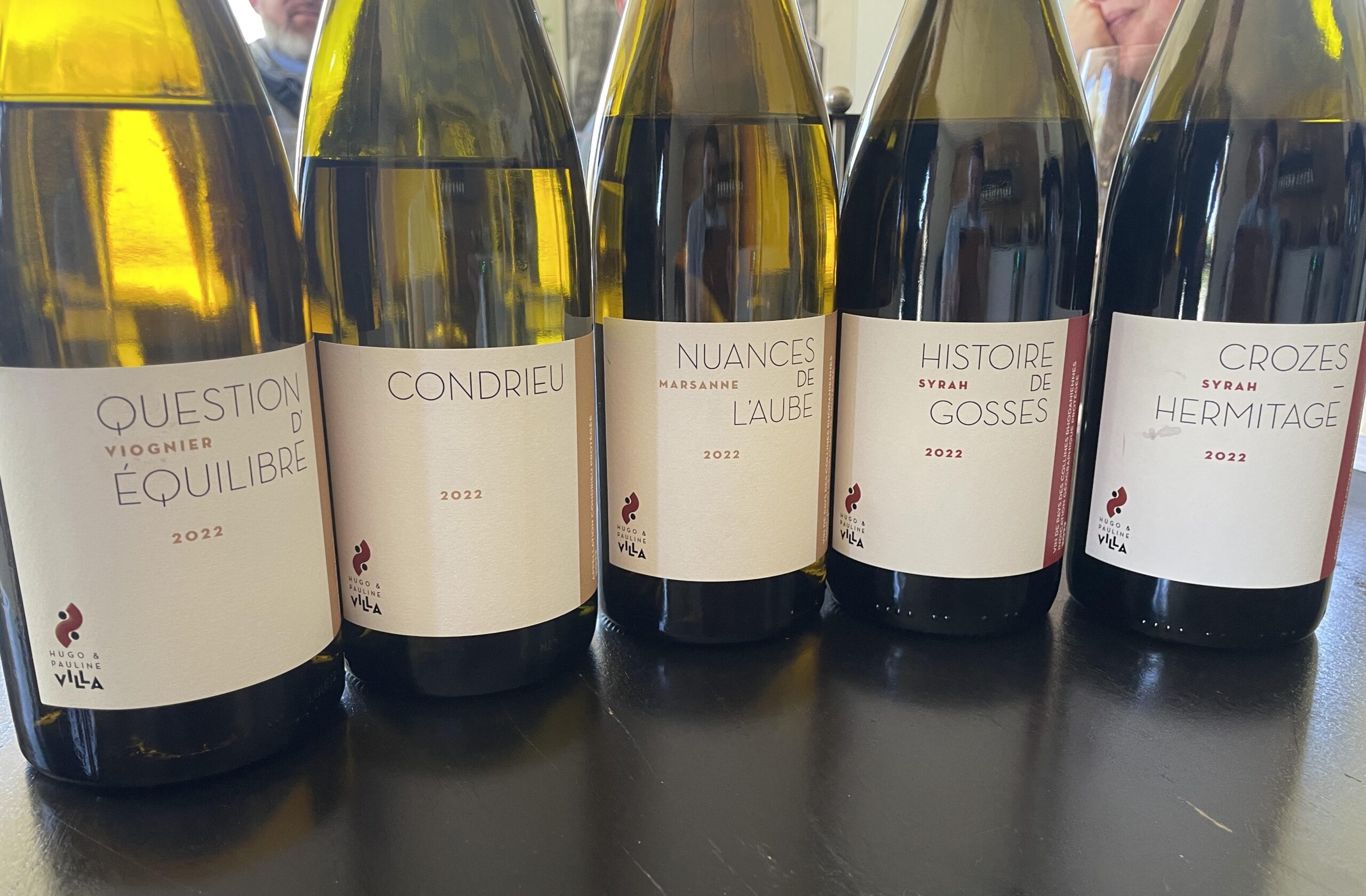
| IGP Collines Rhodaniennes "Question d'Équilibre” | Viognier | This comes from vines planted just after the turn of this century. Soil is thin and shallow, made up of schist and gneiss on top of granite, and harvest is by hand on the early side because the aim here is to have a Viognier with freshness and tension rather than voluptuousness. Ferments are spontaneous and two-thirds of the wine is aged in steel while the rest is brought up in older barrels and demi-muids. Production averages 8,000 bottles. Tech sheet here. |
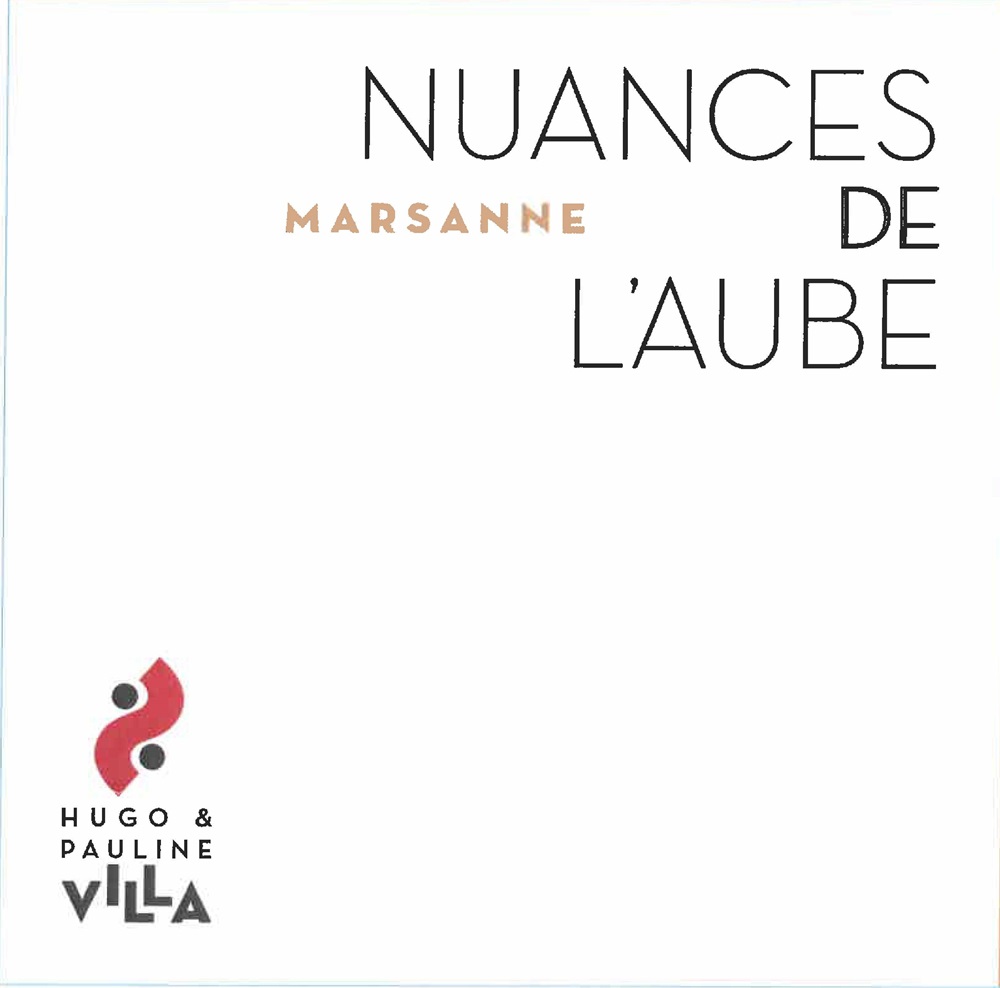
| IGP Collines Rhodaniennes “Nuances de l’Aube” | Marsanne | The soil is thin and shallow, made up of schist and gneiss on top of granite. Harvest is by hand on the early side, ferments are spontaneous and the élevage is entirely in concrete, making for an especially crystalline rendition of Marsanne. Production averages 5,000 bottles. Tech sheet here. |
| Saint Joseph blanc | Marsanne | In contrast to their father’s white St Joe, which is from old vine Roussanne, this is a white St Joe from relatively young vine Marsanne. Ferments are spontaneous and élevage is for one year in wood, mostly old and a mix of 228L and 500-600L demi-muids. Production averages 6,000 bottles. Tech sheet here. |
| Condrieu | Viognier | From vines planted on these granite slopes around the turn of the century. They’re hand-harvested, the ferments are spontaneous, and élevage takes place in 228L barrels plus demi-muids (400, 500, and 600L) for one year. Roughly 20% of the wood is new. The wine has Condrieu’s extraordinary aromatics with loads of texture and tension. Production averages 5,000 bottles. Tech sheet here. |
| Vin de France “Histoire de Gosses” | Syrah | From a parcel planted in the 1970s in the hills of Saint-Julien-en-Saint-Alban at the southern end of the northern Rhône. Soil is gneiss with chalky marl overtop of granite bedrock. The fruit is destemmed and ferments are spontaneous in concrete and steel, followed by an élevage of 12 months in mostly older 500 and 600L demi-muids for two-thirds of the wine with the rest raised in steel. Production averages 10,000 bottles. Tech sheet here. |
| Crozes-Hermitage | Syrah | They buy these grapes from a neighbor of their father’s parcel in this appellation. Soils are glacial deposits of galets roulets and loess, giving a wine with breadth and frame. The fruit is destemmed, ferments are spontaneous and the élevage is for 12 months in large upright oak vats. Production averages 12,000 bottles. Tech sheet here. |
| Saint Joseph rouge | Syrah | These vines are in their hometown of Chavanay in the northern sector of the St Joe appellation (think more pepper and spice in a slenderer frame than St Joes grown further south). Schist and gneiss overtop of granite bedrock. Roughly two-thirds of the grapes are destemmed, ferments are spontaneous, and élevage takes place in mostly older 500 and 600L demi-muids. Production averages 3,000 bottles. Tech sheet here. |