Poggio della Dogana, Romagna
| Country & Region | Italy |
| Appellation(s) | Romagna |
| Producer | Paolo and Aldo Rametta |
| Founded | 2016 |
| Website | www.poggiodelladogana.com/en |
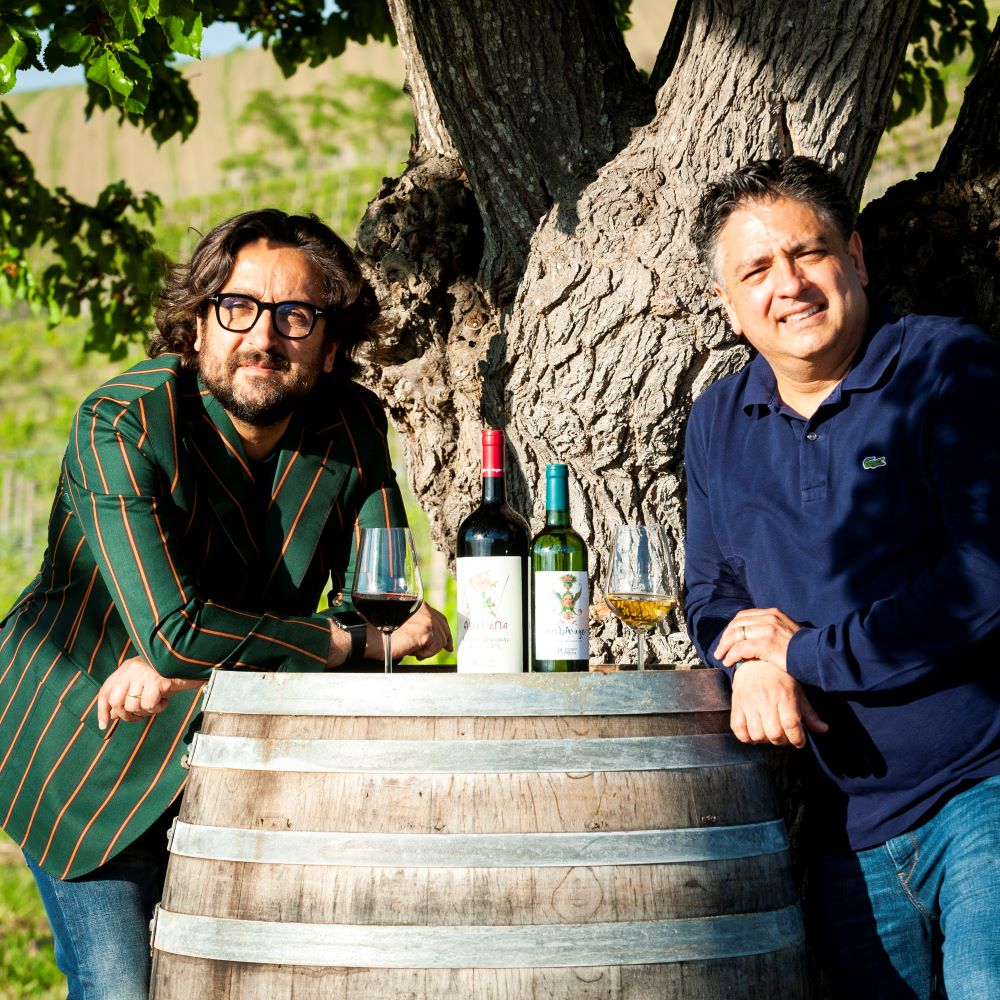
In 2016 two brothers bought a vineyard property in the Apennines hills of Romagna on the enthusiastic advice of a vineyard expert. The two were Paolo and Aldo Rametta, from the nearby coastal town of Ravenna. They ran a renewable energy company dealing in solar and windmills, but they wished to do something more connected with their roots in Romagna. Among the many things deeply culturally rooted in Romagna, wine stood out for them.
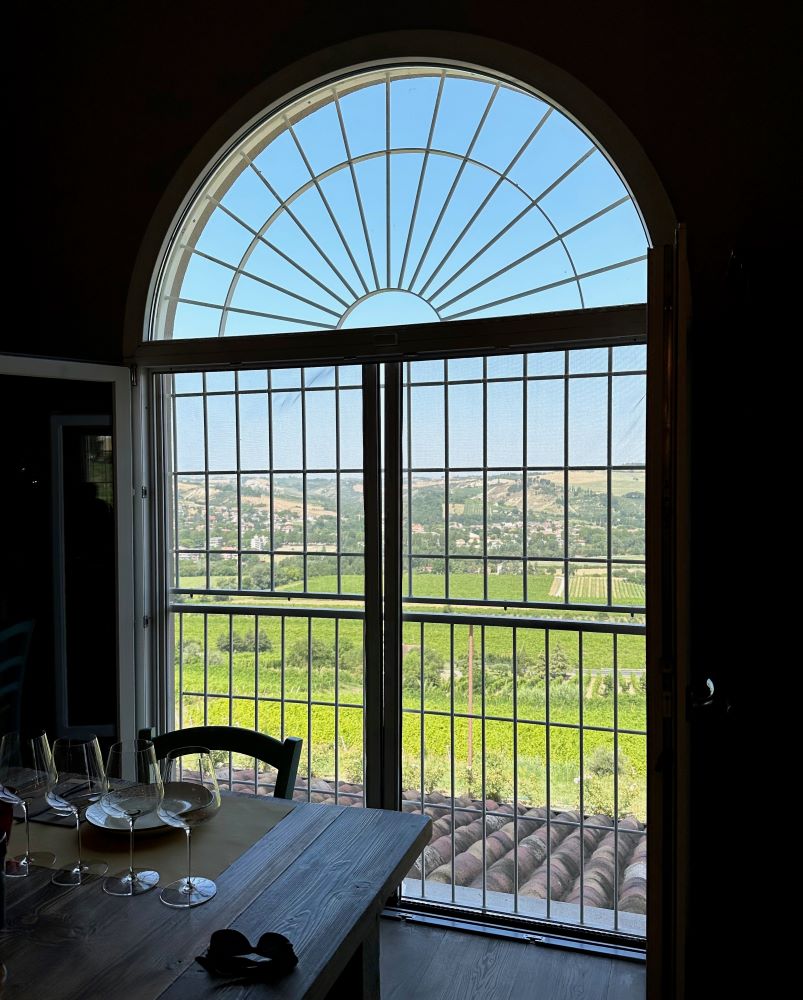
The property was Poggio della Dogana (dough-gahna), which literally translates as Hill of the Custom House. While that house is long gone, the shot below looks out of the current structure. The hill marked the old Medici border between the Grand Duchy of Tuscany and the Papal States, and the original customs house overlooked the narrow valley’s fortified town of Terra del Sole, built by Cosimo I in 1564. It was the furthest expansion into Romagna ever made by the Grand Duchy. Constructed upon a rectangular plan, the town had thick walls and a bastion at each of the four corners, which inspired the Rametta brothers to name their flagship wine “Quattro Bastioni.”
The home vineyard of Poggio della Dogana grew on that hillside in the commune of Castrocaro Terme (which sprouted up as a suburb of Terra del Sole). There were 9 hectares or 22 acres of vines, thriving in brown and ochre clay soils chock full of minerals, for these soils lay overtop of cold thermal springs (hence the Terme in Castrocaro—the suburb was founded as a spa town).
In a parallel valley just to the northwest grew Poggio’s second vineyard. This was in the commune of Brisighella, 11 hectares or 27 acres of vines growing at somewhat higher elevations than Castrocaro, in distinctly different soils of yellow sandy marls alternating with calcareous clays. Between the Brisighella and Castrocaro holdings, Poggio della Dogana had 21 hectares of vines whose parcels grew on hillsides overlooking two narrow valleys running up from the Adriatic plain to the spine of the Apennines. Most of the parcels were planted around the turn of the century; all of them went organic the day the Rametta brothers (that’s Aldo below) took over in 2016.

There was no question about working organically (come on, these are renewable energy guys). The vineyard expert who advised them whole-heartedly agreed. His name is Francesco Bordini, a lanky enologist/viticulturalist with a PhD. Labeled the “undisputed Romagna Sangiovese specialist” by critic Walter Speller, Bordini gained much of his knowledge at the hand of his father, a man without academic degrees but who managed the viticulture for the historic property of Ronchi di Castelluccio for nearly fifty years. The wines of Castelluccio were the first to bring the spotlight back upon Romagna late in the 20th century, following its long downward spiral after phylloxera, and Bordini’s father became a local legend. Bordini himself was instrumental in creating the first geological map of Romagna’s viticultural zones.
What clinched Poggio della Dogana for the Ramettas, and made their leap of faith possible, was that Bordini agreed to help them. These days, two of his protégé work with the brothers at the domaine, doing the hands-on enological and viticultural work (a woman heads up the cellar while a man heads up the vines). Bordini consults on every important decision.
In 2020, the Ramettas were presented with another extraordinary opportunity: to take ownership of the celebrated estate of Ronchi di Castelluccio. It sits high in the hills, conveniently sandwiched between Castrocaro and Brisighella. Previously, the brothers rented space in a nearby winery to make their wines because Poggio had no facility (the original owners sold the grapes to the co-op). The brothers were able to swing the transaction, and now the Poggio della Dogana grapes go straight to Castelluccio for fermentation and aging in one part of the cellar under the watchful eyes of Francesco Bordini. Bordini oversees everything at Castelluccio too; he has taken over where his father left off. The estate continues to produce its own wine (these days, thanks to the Ramettas, with its electrical needs met by an array of solar panels).
About the Poggio della Dogana labels, the artwork is from Silvio Gordini, a celebrated painter and teacher in Bologna during the Belle Époque era. He was the great-great grandfather of the Rametta boys. Some of the cuvée names come from their maternal grandfather, who had a passion for harness racing. Each of his horses was a family favorite and each had a pet name.
About Emilia-Romagna, it’s one of 20 geographical regions in Italy. Bordered by Marche, Tuscany, Liguria, Piedmont, Lombardy and Veneto (winemaking regions all), it takes its name from the Via Aemilia, a Roman road that ran along the foot of the Apennines Mountains, and from Romagna, a key region for the Romans in the waning days of the empire whose capital had been the Rametta brothers’ hometown of Ravenna. Emilia is tied to Lambrusco, whereas Romagna is tied to Sangiovese, a grape that grows from Puglia in the south up to Romagna, its northern limit.
The Wines
| Wine | Blend | Description |
|---|---|---|
| Belladama | Albana | Albana was granted Italy’s first DOCG for a white grape in 1987. It is one of the country’s most remarkable white wines, and practically all of it grows exclusively in Romagna. Poggio’s rendition comes from vines in both of its plantations in Castrocaro and Brisighella. Harvested on the early side, the grapes are pressed gently, and allowed to ferment spontaneously in steel. Subsequent élevage lasts for 7-8 months in steel. The color is a beautiful yellow, and the aromatics jump from the glass with notes of flowers, chamomile, nut oil and lemon. The wine has excellent acidity, and with age it can take on characteristics of Riesling. Belladama was one of Grandpa’s horses. Production currently averages 750 cases. Tech sheet here. |
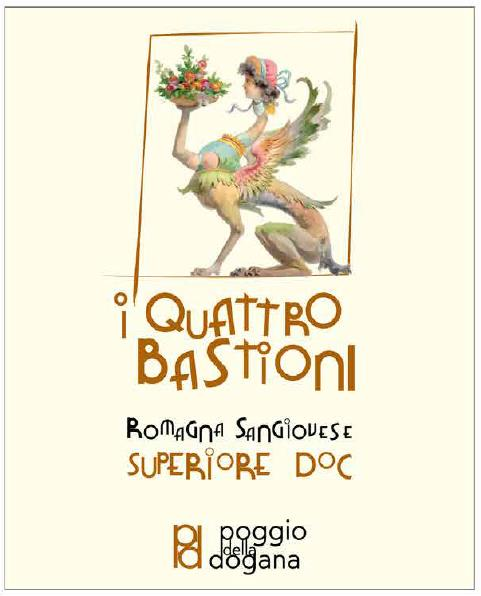
| Quattro Bastioni | Sangiovese | This wine comes entirely from the mineral clays of Castrocaro with the vines having a north-northwestern exposition. As its back label states, the average elevation is 180 amsl (Above Mean Sea Level). Fermentations are spontaneous in steel, and élevage takes place over roughly 10 months in concrete vats. The color is intensely dark and the nose is explosive with dark berries, soil notes, and spice—this is a wine that grabs your attention. The name refers to the four bastions anchoring the original fortified walls of Terra del Sole. This is the estate’s largest production in red, averaging 825 cases. Sangiovese is a late ripening varietal, one that according to Francesco Bordini is a great interpreter of terroir. It’s often asked how Sangiovese di Romagna differs from its Tuscan brethren. The terroir is cooler in the Apennines hills of Romagna than in Tuscany, and the soil is not so stony; the wines consequently have superb acidities, and an elevated sense of fruitiness with excellent freshness in contrast to Chianti’s typically more tannic structure. Tech sheet here. |
| Arlesiana | 95% Sangiovese, 5% Ciliegiolo | One of the estate’s two crus, coming from a single parcel on the east-facing slopes of Brisighella, rich with yellow sands and calcareous soil. Those soils, plus an average elevation of 210 meters, make for an especially fine and intense Sangiovese. Spontaneous ferments in steel followed by aging in concrete vats for roughly 12 months. Arlesiana was another one of Grandpa’s horses. Production averages 600 cases. Tech sheet here. |
| Santa Reparta | Sangiovese | The second of the estate’s crus, this from a single parcel in the Castrocaro plantings, facing north-northwest at an average of 180 meters above sea level in mineral-rich clays, giving the wine a mouthful of fruit and rich, soft tannins. Spontaneous ferments in steel followed by aging in concrete vats for roughly 12 months. Santa Reparata is the patron saint of the local town of Terra del Sole. Production averages 350 cases. Tech sheet here. |
| Beldemonio Vermouth Rosso | Sangiovese | All from the Castrocaro plantings and made only in the warmer years because they want extra ripeness for vermouth. Vermouth came about because the brothers happened to find themselves with some rather ripe Sangiovese, and they decided it would be perfect for…dry vermouth! This is aged in concrete followed by a year in older barrels. After that, it undergoes an infusion with red and bitter oranges in alcohol, then spices (pepper, cinnamon and the like), and lastly an infusion of aromatic herbs. It’s finished with absinthe. In the years when it is made, production averages 2,500-3,000 bottles. The brothers worked closely with a vermouth specialist to come up with what they thought the best infusion of herbs and oranges. Try it on the rocks with a thin slice of orange. Tech sheet here. |