Model Farm, California
California and Washington DC regional sales only
| Country & Region | Sonoma Valley, California |
| Producer | Joanna and Sean Castorani |
| Founded | 2013 |
| Website | www.modelfarmwines.com |
Readers already know how much I have admired the wines from Model Farm, run by the husband and wife team of Sean Castorani
and Joanna Wells…
—John Gilman, View from the Cellar, March 2025
Model Farm is the artisan brand of Joanna and Sean Castorani, a couple who, having caught the wine bug early on and diligently worked their way up the ranks, embarked on a labor of love in 2013 with a two-acre plot of vines. They wanted to farm the grapes they would turn into wine. Their guiding light was Jack London’s “Model Farm” in Glen Ellen, where London had launched a progressive farming program to replenish his soils. His ranch wasn’t economically successful, and the ideas he espoused—natural fertilizers, planting cover crops, rotating crops, terracing hillsides and installing drainage tile to mitigate erosion—were more or less discarded for generations after his death in 1916.
Be that as it may, a century later the concept of creating a model through trial and error fundamentally appealed to this couple. They had just leased the two acres in the Petaluma Gap AVA, and it was this patch of ground that became their place of experimentation to learn how farming affected the quality of grapes that they turned into wine.
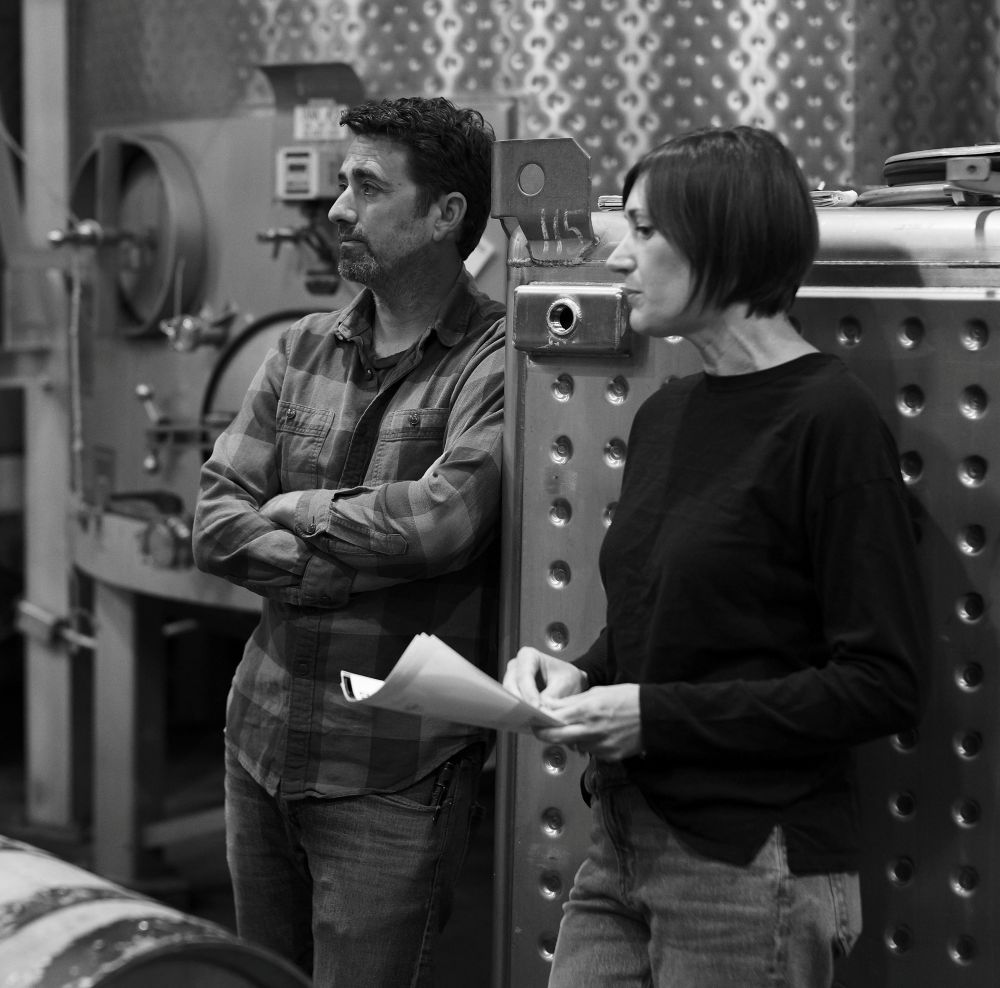
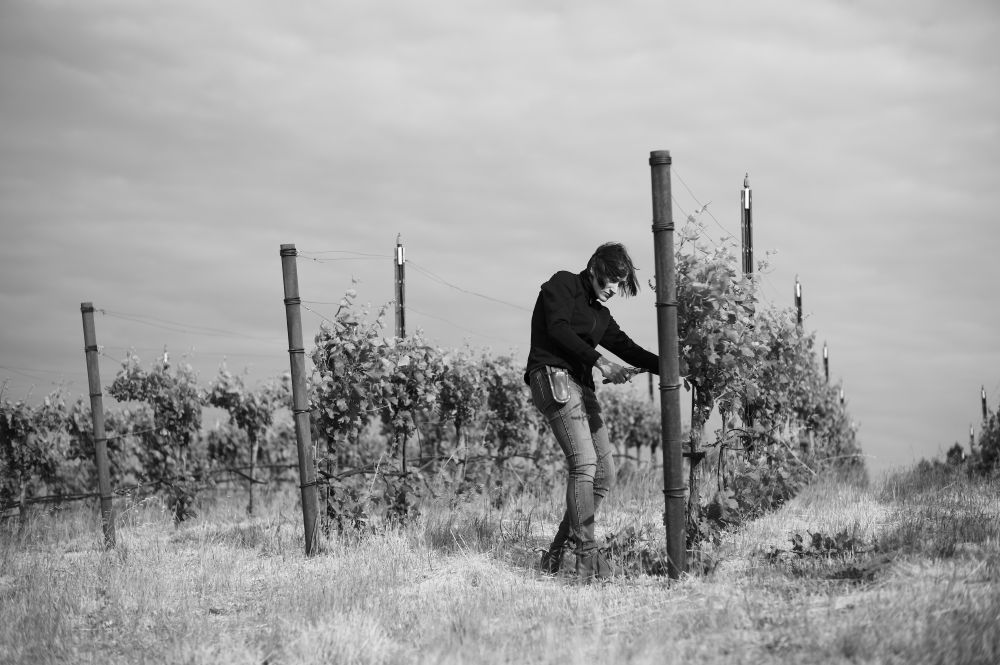
The two met at the Robert Sinskey Winery in Napa. Joanna’s path started with a winery job in Walla Walla, where she moved sight unseen upon graduating from college in Denver with a business major (she found no passion in spreadsheets). For two years, she was the only cellar hand at the side of the winemaker for the family winery of Zerba. In 2008, she moved to Napa and knocked on Sinskey’s door, a winery that intrigued her because it was a prominent nonconformist at the time (farming organically, concentrating on Pinot Noir rather than Cabernet, and producing the valley’s best selling dry rosé year in and out). She took a job in the tasting room and quickly moved into management.
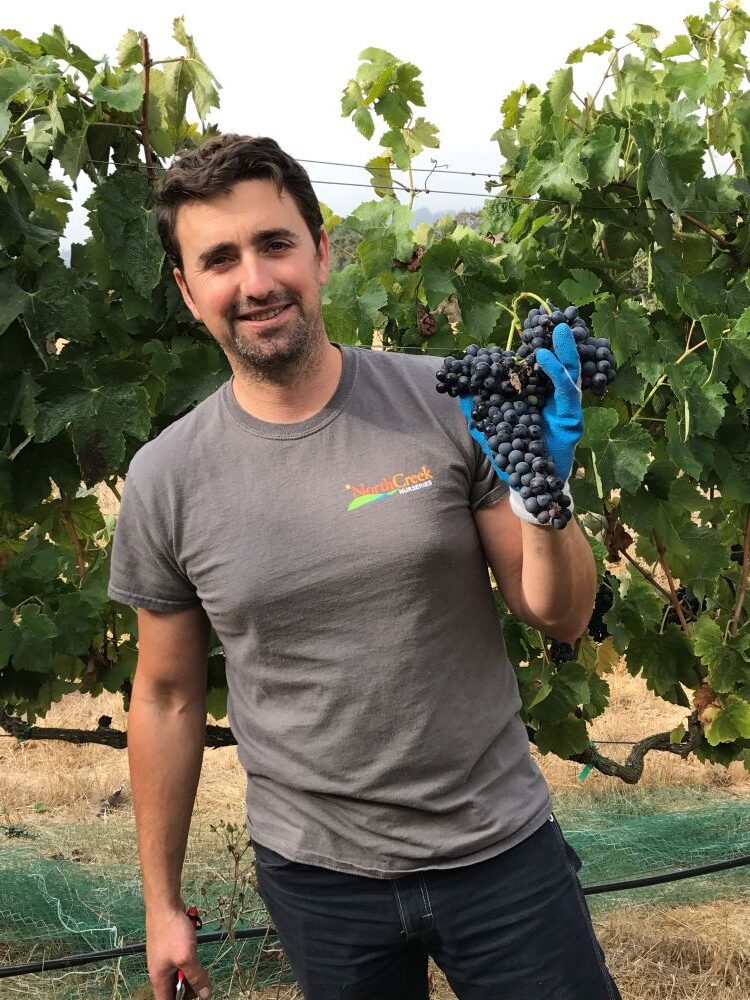
Sean sold wine for a distributor in Delaware while in college, earned a Master’s in environmental science at Cal Monterey Bay studying soils and their relationship to grape chemistry, and continued the research at UC Davis. He also worked harvest with Aaron Pott at Seven Stones. Meanwhile, at a part-time gig in the Sinskey tasting room, he met Joanna.
In 2012 they took what today would be highly coveted assistant winemaking jobs: Joanna at Kutch Winery and Sean at Rhys. In 2013, they leased the two acres of Syrah in the Petaluma Gap. For seven vintages they worked those vines in the evenings and on weekends without any heavy equipment but with all manner of commitment. Depending on the vintage, they made between two and seven barrels of wine, some to their satisfaction, some not. But they earned their stripes and figured out what worked best for their style of wine.
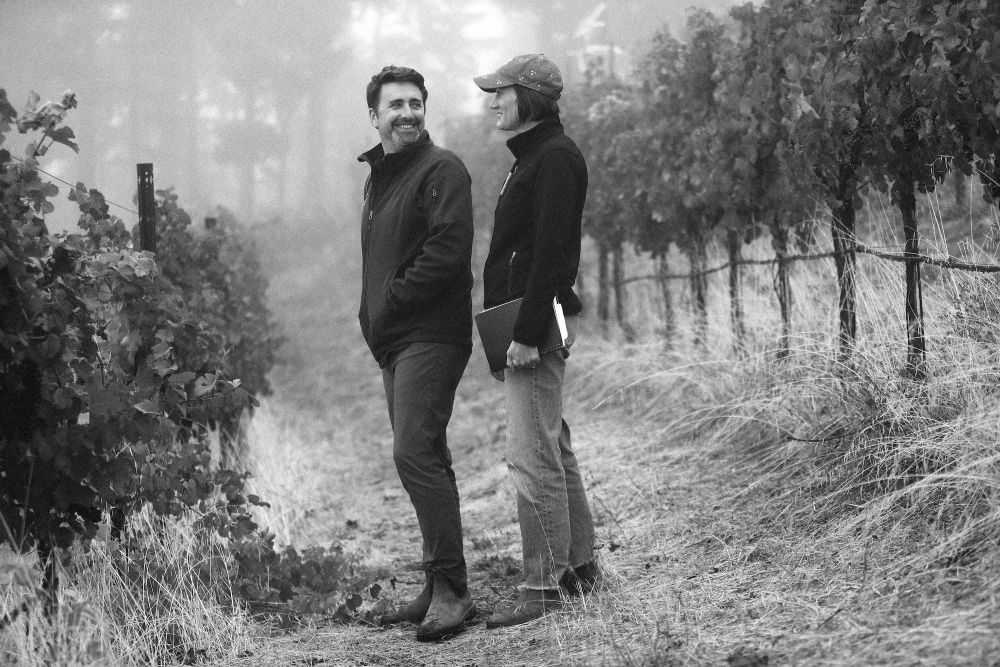
In 2016, they expanded to make wine from the P.M. Staiger vineyard, and in the years that followed the couple branched out further. Their criteria for sourcing were simple: higher sites at cooler elevations with owners who cared (deeply) and who had the same farming ethos as they did. They undertook this with the blessings of their employers at Kutch and Rhys, where they worked until 2020. By then, Model Farm had reached adulthood.
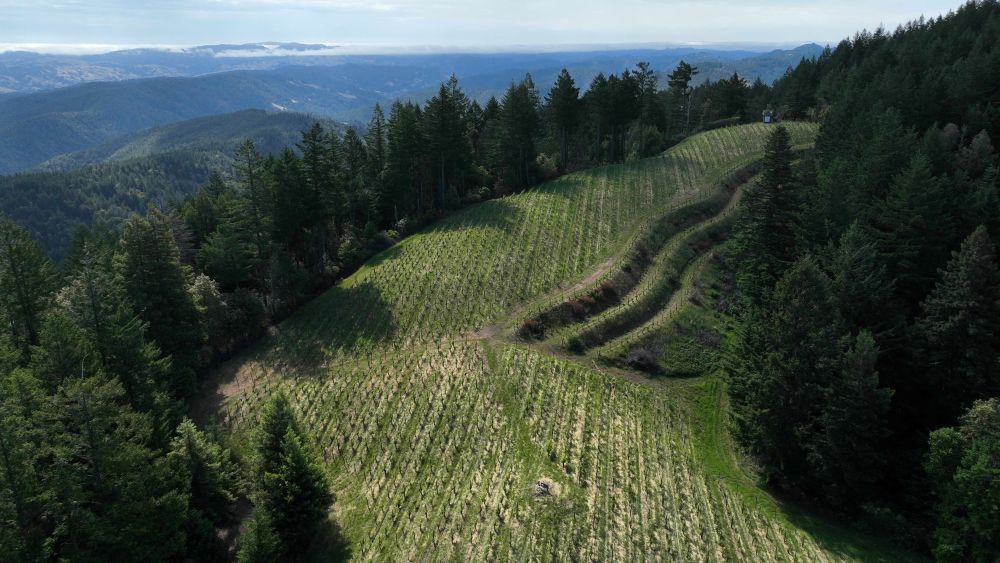
In 2021, the couple decided to make a new range of wines. “I have always,” Joanna wrote years later, “been on a mission to bring handmade, artisan domestic wine to the marketplace in an affordable way.” Thus was born Alta Heights, created to bring back what California had all but abandoned early on during the wine boom of the 1990s—distinctive, quality-driven wines of value (really, there used to be no shortage of such wine produced throughout California, including, notably, in Napa Valley). As the name suggests, the wine comes from high elevation alpine vineyards, just like the Model Farm wines, without inputs save perhaps for a bit of sulfur. These are serious, characterful wines you can buy and still have change in your pocket.
The Wines
| Wine | Blend | Description |
|---|---|---|
| Berger Vineyard Cabernet Sauvignon | Cabernet Sauvignon | Made from heritage vines planted on St. George rootstock in 1973, growing on an east-facing ridge of Sonoma Mountain. These old vines are farmed by Ned Hill, a 5th-generation grower with values in sync with those of Joanna and Sean. No herbicides or chemical pesticides are used, and mildew is controlled by natural and bio fungicides. The grapes are de-stemmed and ferment spontaneously in small wooden uprights without additives or commercial enzymes. Extractions are gentle. The wine is aged for 18 months in barrel, mostly neutral, and bottled without fining or filtration. This is old-school California Cab at its best. Production averages 200 cases. |
| Wildcat Mountain Vineyard Chardonnay | Chardonnay | Planted by Steve MacRostie in 1998 and farmed today by Ned Hill on the ridge that separates Sonoma Valley from Petaluma, some 1,000 feet in elevation. The soil is meager, full of volcanic rock on top of metamorphic bedrock, and MacRostie chose one of the windiest, ripening retarding sites in Sonoma Valley. The wine is made with whole clusters in small lots with native ferments in barrel (all neutral) for both alcoholic and malolactic fermentations. Élevage is 12 months in barrel, followed by six in steel barrels, entirely on fine lees without stirring or fining. Production averages 300 cases. |
| P. M. Staiger Vineyard Chardonnay | Chardonnay | Made from heritage vines planted on their own roots in 1973 high on a ridge in Boulder Creek, Santa Cruz Mountains. The cuttings came from David Bruce’s original vineyard of Wente clone Chardonnay. It’s a small, cold vineyard still somehow keeping phylloxera at bay while producing small yields at low sugars and excellent acidities. Élevage is 12 months in older barrels, followed by six in steel barrels, entirely on fine lees without stirring or fining. Production averages 180 cases. |
| Sonoma Mountain Cabernet Sauvignon | Cabernet Sauvignon | This comes from younger vines planted at the Berger site in the 1990s. The grapes are harvested with the heritage grapes but fermented separately along the same lines as the heritage fruit. Production averages 200 cases. |
| Alta Heights Pinot Noir | Pinot Noir | Compelling wines at compelling prices is the mantra here with Alta Heights. The appellation is legally and simply California, but qualified by Joanna and Sean as California Alpine Wine. The distinction is key: Alta Heights is not a product of valley floors but of mountain tops that make for singular wines of deep concentration and driving natural acidity. This wine is entirely from the rocky heights of Signal Mountain along the Mendocino coast ridge, the highest vineyard site in Mendo (Sonoma too for that matter, and tied for highest in Napa) at 2,742 feet in elevation, growing on 30%+ grades and planted to seven selections of Pinot Noir. The vines are dry-farmed and tended biodynamically, and the wine is made traditionally and aged in barrel for 12 months (in warmer years, some whole cluster is used during ferments; in colder years, the grapes are all de-stemmed and consequently as much as 10% new wood may be employed during the aging process). No fining and no additives whatsoever except minimal effective SO2. Production averages 1,500 cases. |
| Alta Heights Chardonnay | Chardonnay | Like the Pinot above, this comes from the top of Signal Mountain. The vines are heritage clones of Wente, Mt. Eden and Hyde Wente that went into the ground in a planting overseen by Joanna in 2019. The grapes are whole-cluster pressed and all ferments are spontaneous. The wine is brought up in neutral barrels for 12 months and finished for six in stainless steel barrels on its fine lees without stirring or fining. The only additive is minimal effective SO2. Production averages 1,500 cases. |