Champagne Lancelot Pienne, Cramant
| Country & Region | France, Champagne |
| Appellation(s) | Champagne |
| Producer | Gilles & Julien Lancelot |
| Founded | Lancelots have been growers for over 120 years and became a Récoltant-Manipulant in the post WWII era. Julien joined his father Gilles officially in 2022. |
| Website | https://www.champagne-lancelot-pienne.fr/ |
Julien, Gilles’ son, works with him in complete trust to further increase the level of these wines with superb aromatic expressions thanks to a subtle blend of texture and freshness that never hardens the fruit—an essential quality when working with Chardonnay on chalk.
—4 stars, Bettane & Desseauve, 2025 Guide to Wine
I had my second round of wines from Gilles Lancelot in Cramant this spring, with his Champagne Lancelot-Pienne bottlings showing beautifully and very much worthy of inclusion in any listing of great grower Champagne.
—John Gilman, A View from the Cellar, April 2021
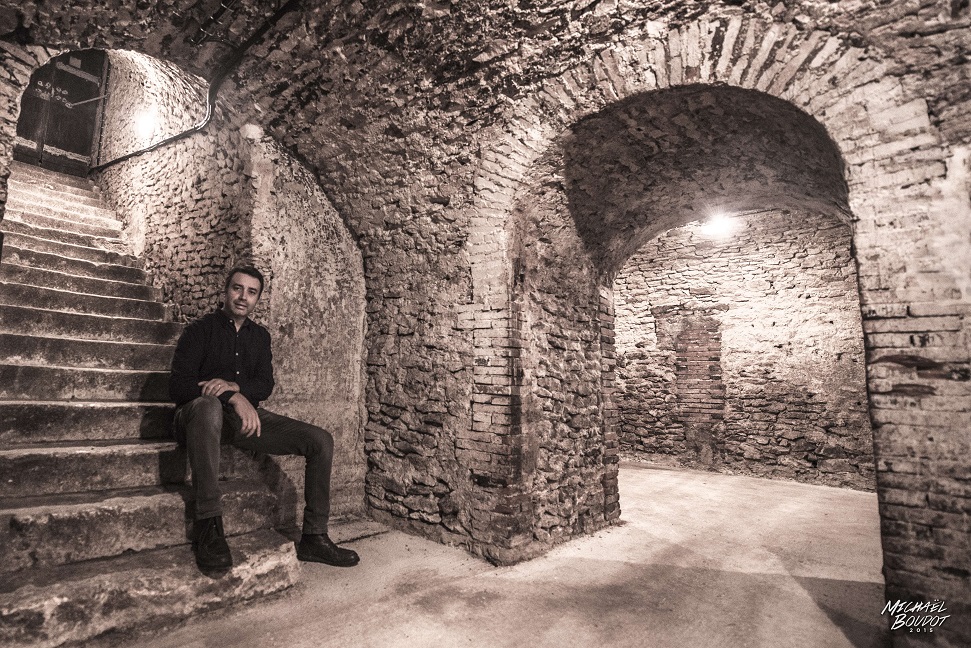
In 2010 Gilles Lancelot and three friends founded Les Artisans du Champagne, a group for exchanging ideas and to host tastings (above all during the region’s annual April salons). He had taken the reins from his father at Lancelot-Pienne in 2005 and three years later Michel Bettane, France’s top critic, singled Gilles out for his grand cru blanc de blancs. Bettane extolled Gilles’ style of capturing the contradictory elements of precision and textured creaminess within a framework of very fine bubbles. Today, Les Artisans is one of Champagne’s elite bands, and its sixteen members are a who’s who of growers.
In 2017 his son Julien persuaded him to start planting cover crops between the rows of their vines, as well as to implement a rigorous parcel-by-parcel analysis of grape maturities. At the time, Julien was deep in agronomical studies at AgroParisTech and fresh off an internship at Domaine J-L Chave, where he worked with the man in charge of transitioning Chave’s vines to biodynamic farming, a subject that fascinated him.
In 2018 Gilles green lit his son’s ambition to squirrel aside a small amount of the harvest from Mont-Aigu, a parcel on a knoll in the southeast sector of Chouilly under the eye of Château de Saran. From that batch they made several hundred bottles and aged it for five years on the lees in bottle (when released in 2024, Bettane rated it 95).
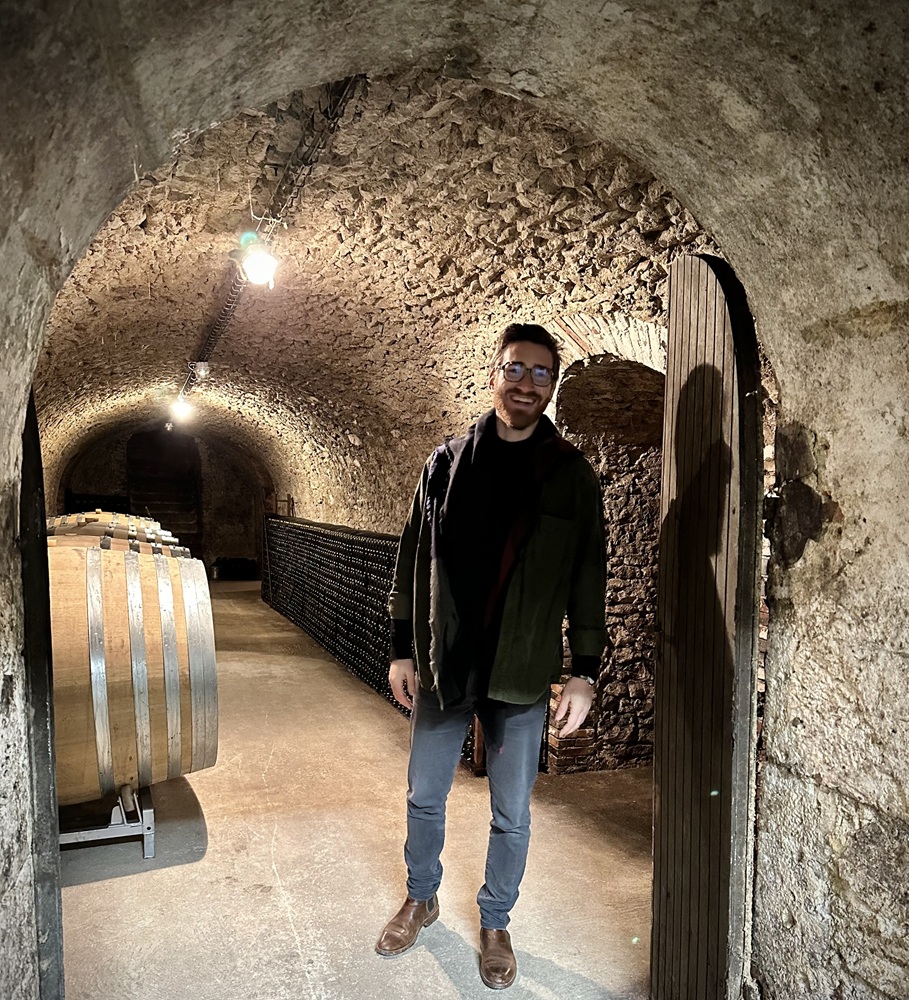
In 2019, coming off his viticulture and enological studies in Montpellier and an internship at Leoville Las Cases, Julien got Gilles to buy the domaine’s first barrel: a 600-liter demi-muid, made with steam to shape the staves rather than fire, and without any toasting (steam is meant to minimalize harsh wood tannins and allow for “cleaner” transfer of oxygen during ferments and élevage). Prior to that, Gilles had worked strictly with steel tanks, and the concept of wood was foreign. So he said okay, but only one as an experiment.
That same year, Julien made red wine—something Gilles had never done—in a 30-liter glass demijohn. Initially, he wanted to do it from Pinot Noir to see if he could give the Burgundians a run for their money, but Gilles, who knew the vines much better, guided him toward sélection massale Meunier in Monthelon that Julien’s great-grandfather had planted in 1961 (in a parcel named Malfois, which translates literally as bad time, although what happened there back in the day remains a mystery). Julien jumped at the chance. Unfortunately, what would become of the wine was never realized: the demijohn accidently toppled over and shattered on the winery floor, a bad time indeed that disappointed both of them.
In those days, Julien was only helping out (while clearly pursuing his endless curiosity). His day job was with a research and development team at a LVMH Champagne house. Following that, he went to New Zealand for a six-month internship to study micro-ferments and barrel influences. The pandemic hit right after this internship, leaving him stuck in New Zealand, so he traveled the north and south islands for four weeks as seemingly the only tourist in the country during lockdown.
In 2020 he made a second red wine with Gilles that went on to be blended into a rosé as well as bottled as a still red wine (aka, Coteaux Champenois). That year he entered business school, which led to a year-long stint with a well-known Champagne house that promoted ecological concepts and organic viticulture, but he left after seeing that how this house actually operated didn’t match his convictions. Julien had developed deeply held environmental principles, and the experience convinced him that he didn’t want to work for others; he wanted to control his own destiny. And where he might do that, he realized, lay at his fingertips: his family’s domaine.
In 2022 he officially joined Lancelot-Pienne. By then, the rosé cuvée he first made two years earlier proved successful enough to be marketed as La Dame du Lac, playing off the King Arthur reference and honoring his mother, Gilles’ wife. He also made an orange Champagne, which on one level is ridiculous because it’s strictly illegal and can’t be commercially sold, but he made a tiny lot just to see what it would be like. Meanwhile, the experiment with the demi-muid had impressed Gilles so much that their cellar now had a half a dozen such barrels.
In 2023 father and son embarked on aging the La Dame du Lac and a part of the Marie Lancelot cuvées under cork rather than under the customary crown cap. This is a more expensive method of aging that promotes additional evolution and complexity in the wine. It’s also much more labor intensive: every bottle must be checked at disgorgement for TCA. Gilles likes the idea of cork aging, but, as with the barrel, he wants to start slowly and see how it pans out.
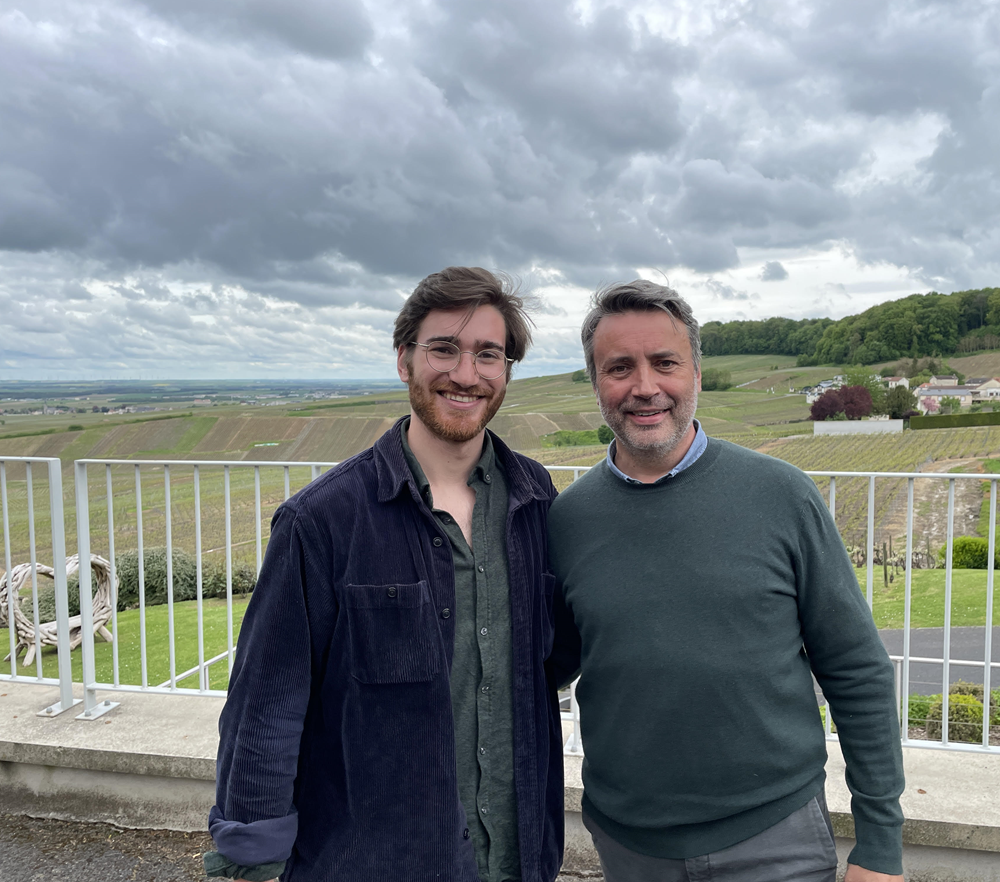
They farm nearly 22 acres of vines, more or less the average that a grower with a small team can handle. Their base is in Cramant, and their 79 parcels spread along the northern sector of the Côte des Blancs, dip into the Côteaux Sud d’Epernay and reach into the Marne Valley. The breakdown is as follows:
• Côte des Blancs: 6 acres of Chardonnay in grand cru Cramant, Chouilly and Avize, plus 0.75 acres in 1er cru Cuis.
• Côteaux Sud d’Epernay, the communes of Monthelon and Mancy: 4.5 acres of Meunier; 4.5 acres of Chardonnay; and 0.5 acres of Pinot Noir.
• Montagne de Reims, commune of Bisseuil: 1 acre of Chardonnay.
• Vallée de la Marne, commune of Boursault: nearly 0.5 acres of Chardonnay; 3 acres of Meunier; and 1.5 acres of Pinot Noir.
The varietal breakdown is 60% Chardonnay, 30% Meunier and 10% Pinot Noir. The oldest vines were planted in 1920 while the average age across the total is around 40. Julien, like Gilles before him, is concise with information pertaining to each cuvée on the back labels. Annual production averages 65,000 bottles or 5,500 cases.
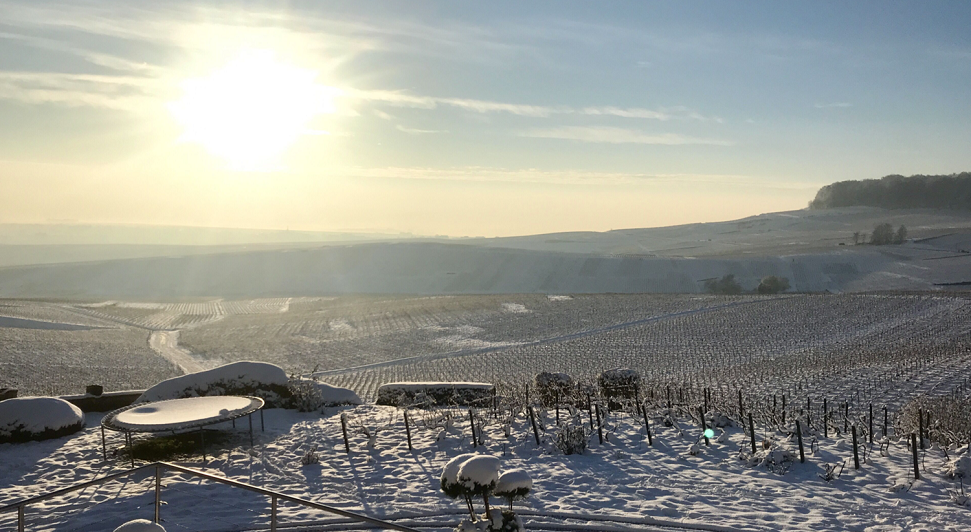
The family comes from a long line of growers. Gilles’ great-grandfather cultivated his own grapes in Cramant in the post WWI years while working as Mumm’s vineyard manager, a connection that enabled Gilles to buy the old Mumm winery in Cramant early this century (the photo below of Cramant’s vines in winter is from their window). His grandfather began domaine-bottling Champagne in the post WWII years. In 1967 his father married Brigitte Pienne from Chouilly and the two domaines merged. Gilles himself officially took the reins of Lancelot-Pienne in 2005 following his enology studies and after working at his father’s side since 1995.
These days every parcel or block is carefully monitored, and treatments in the vines are always organic first with any subsequent modern synthetic applications made only if truly needed. The larger parcels are vinified separately, while those within close proximity of one another are vinified as a group (see the vineyard map below of the Cramant parcels to get a sense of this). Each of the many parcels offers something different, and each is trained and farmed in ways that best suit it. Both Gilles and Julien like malolactic fermentations for the aromatic complexity this gives, but they prize freshness and elegance too, so decisions on ML are made after blind tastings. The bacteria is well present in the cellar and whether or not to permit ML to happen on its own is simply a matter of temperature control of a given vessel.
Be it in demi-muids or stainless steel tanks, the wine undergoes a good, long élevage of ten to eleven months before bottling en tirage for a minimum of 30 months. Upon disgorging, the dosage is kept to 2-5 grams to showcase the wine’s origins. Any reserve wine comes from perpetual reserves that Gilles began around the turn of this century.
What Julien and Gilles aim for is detailed clarity in their wine, but with textured body, which is what gives Champagne its joy.
The Wines
| Wine | Blend | Description |
|---|---|---|
| Instant Présent Brut NV | Chardonnay | Yesterday is history, tomorrow is a mystery, but today is a gift, that's why it's called present. The perfect apéritif Champagne. In considering the range of Lancelot-Pienne’s Blanc de Blancs, Instant Présent is the widest ranging, encompassing vines from four zones, and as such represents the first of four ever-narrowing concentric circles of Chardonnay. The wine is made predominately from vines in the Côteaux Sud, in the commune of Monthelon, where Julien’s grandmother came from and whose parcels these once were. Here clay is the leading geology. The second source is grand cru vines on the northern end of the Côte des Blancs, mostly in Cramant, which belonged to Julien’s grandfather. The terroir is chalk. The third source is their parcel on the limestone hill of Bisseuil, overlooking the Marne and technically on the Montagne de Reims. Instant Présent is a blend of clay (fruitiness), chalk (salinity and texture) and limestone (lightness and lift) terroirs from these three distinct zones. Aged on its lees for 30 months before disgorgement; production averages 2,000 cases. Tech sheet here. |
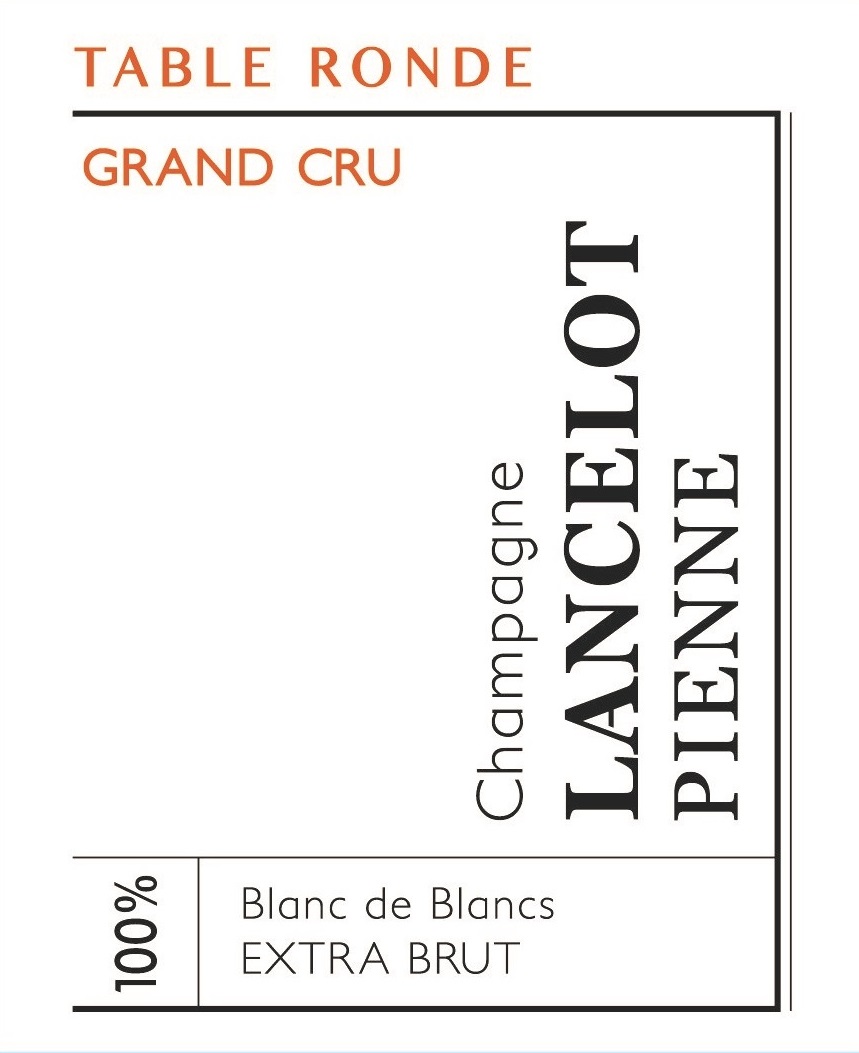
| Table Ronde Grand Cru Extra Brut NV | Chardonnay | The second concentric circle of Blanc de Blancs, narrower than that of Instant Présent in that Table Ronde comes only from Grand Cru vines growing in the northern end of the Côte des Blancs. Cramant leads the way with roughly 60% of the blend for its dominant expression of creaminess and mineral chalk salinity; then Chouilly at more or less 30% for fruitiness and elegance, and lastly Avize at roughly 10% for steely acidity and freshness. The vines come from 25 parcels averaging 50 years of age, and 80% of the wine comes from one vintage with the remainder from a perpetual cuvée of the domaine’s grand cru Chardonnay. It’s bottled in July after the harvest and rests on its lees for approximately three and a half years before disgorgement. Dosage is 2.5 grams and production averages 1,000 cases. The name, of course, comes from the tale of the knights of King Arthur’s court, of which Lancelot was prominent. In real life, Gilles Lancelot married Céline Perceval, and Perceval was another legendary knight in the myth, so it seemed fitting for them to have a Holy Grail wine. Such is the Round Table. Tech sheet here. |
| Marie Lancelot Grand Cru Extra Brut Vintage | Chardonnay | The third concentric circle of the Chardonnay wines, this only from Grand Cru Cramant vines. First made by Gilles and named for Julien’s older sister, this is a highly acclaimed rendition of Cramant, a terroir with considerable complexity: its vines descend off the ridge both to the east (toward Avize, Oiry and Chouilly) and the west (toward Cuis), and face every exposition. They have 15 different parcels to choose from, but normally the choice for this cuvée narrows down to six (see the bottle’s back label for specifics). Fermentation and élevage are done in a mix of steel and demi-muids for ten months, and aging en tirage in bottle on the lees goes for at least 42 months. Dosage is kept under 3 grams and production averages 1,500-2,500 bottles. Tech sheet here. With its bold, ripe fruit and long, elegantly chalky build, it’s a classical representation of Cramant, and a joy to drink. Peter Liem, Champagne. |
| Les Gouttes d'Or Grand Cru Extra Brut Vintage | Chardonnay | The fourth and smallest concentric circle in Lancelot's Chardonnay range (a circle shared with Le Mont Aigu below), Les Gouttes d'Or is a wine from a single-plot within Cramant. It's also labeled Lancelot Perceval in tribute to Julien's mother and a nod to the King Arthur legend (her maiden name being Perceval). The vines were planted in 1969, 1971 and 1990 and grow on a spur coming off the eastern side of the main ridge but still relatively quite high in Cramant's elevation. Exposition is east/southeast, total land surface is just under an acre, and farming is with cover crops followed by light plowing for weeding and bio-controls for warding off disease (if disease pressure is overwhelming, as it was in 2024 with non-stop rains throughout the season, synthetic fungicides will be used to save the crop). This is Cramant: extraordinary creaminess and texture aligned with tension and precision. Élevage lasts 10 months in steel tanks followed by 62 months of aging on its lees in bottle before disgorgement. Dosage is minimal (see back label for specifics) and production averages a few hundred bottles. |
| Le Mont Aigu Grand Cru Extra Brut Vintage | Chardonnay | The first single-plot wine made by the domaine at Julien’s initiative and, like Les Gouttes d'Or and La Dame du Lac, labeled Lancelot Perceval in tribute to his mother and a nod to the King Arthur legend (her maiden name being Perceval). Mont Aigu is a lieu-dit of Chouilly, a village just north of Cramant that bookends the northern end of the Côte des Blancs’ ridge from the plain. Immediately north of Chouilly flows the Marne River, giving this commune a relatively warm microclimate and making for riper wines underpinned by chalk minerality. Le Mont Aigu is Chouilly’s top vineyard site, southeast of the village on a small knoll under the forest of the Butte de Saran and quite close to Cramant’s vines spilling off the ridge. Dosage is minimal (see back label for specifics) and production averages a few hundred bottles. |
| La Dame du Lac Rosé Extra Brut Vintage | Chardonnay with Meunier | Julien’s creation, named for his mother and labeled Lancelot-Perceval in further tribute to her and to the King Arthur fable (her maiden name being Perceval). The aim with this wine is gastronomical; it’s meant for the table. Chardonnays from their clay, chalk and limestone terroirs buttress the powerful aromatics of the old-vine Meunier from the Malfois lieu-dit in the Côteaux Sud d’Epernay village of Monthelon. Dosage is minimal (see back label for specifics) and production averages 2,000 bottles. |
| Accord Majeur Brut NV | 80% Pinot Meunier, 10% Chardonnay, 10% Pinot Noir | The wine comes from 40 parcels with an average age of 55 years. It’s an accord (“major agreement”) between three grapes and three terroirs—Chardonnay and Meunier from the Côteaux Sud, and Pinot Noir from the hills around Boursault in the Marne Valley. The wine is bottled in July after the harvest and aged for five years on the lees before disgorgement. It’s dosed at 5 grams and production is just under 700 cases. Tech sheet here. |