Domaine Labranche Laffont, Madiran
California Sales Only
| Country & Region | France, Southwest |
| Appellation(s) | Madiran, Pacherenc du Vic Bilh |
| Producer | Christine Dupuy |
| Founded | Christine took over from her father in 1992. |
Relying on old vines, including a pre-phylloxera cuvée vinified separately, she presents distinctive tannat wines, straight and pure, which highlight its beautiful clay and pebble terroirs. The constant search for accuracy and balance is evident in both the whites and the reds of Madiran. The mastery of recent hot vintages places this domaine at the top of the appellation.
–La Revue du Vin: Guide to the Best Wines of France 2024
Christine Dupuy produit à partir d’une viticulture exemplaire des vins charnus, réguliers, très ‘terroir.’ (From an exemplary viticulture, Christine Dupuy produces plump, consistent wines, very ‘terroir.’)
–Bettane & Desseauve, Guide des Vins 2019
France’s Southwest region of Madiran has made wine since Gallo-Roman times, and its bounty was noted by the court of Edward the Black Prince of Aquitaine in the 14th century. Tannat’s power and Madiran’s microclimate combine to make one of France’s truly big wines in terms of tannin content (it’s worth noting that Irouléguy, the other Tannat appellation, is higher in the Pyrenean chain where the cooler, wetter weather makes for a more acid and angular rendition of wine). Madiran’s viticulture fell into steep decline with phylloxera and continued to fall during the long, dreary aftermath. In 1953, plantings of Tannat here were down to 15 acres of vines, or so the appellation records claim. Fortunately Madiran (unlike Cahors), managed to escape the frost of 1956. Its revival began in the 1970s. Today, Madiran has some 3,212 acres of vines of various stripes, with the majority in Tannat.
Christine Dupuy took over her family’s six-hectare (15-acre) wine estate, Domaine Labranche Laffont, in 1992 when her father died unexpectedly. She was 23 at the time and the estate had been in her family since before the French Revolution. By chance she had just finished her degree in enology, but she had little practical experience. So she went to neighboring Château d’Aydie, Domaine Capmartin, and Domaine La Chapelle Lenclos, all of whom were among the most prestigious domains in the appellation at the time. During that first year they helped this precocious young vigneronne get off on the right foot.
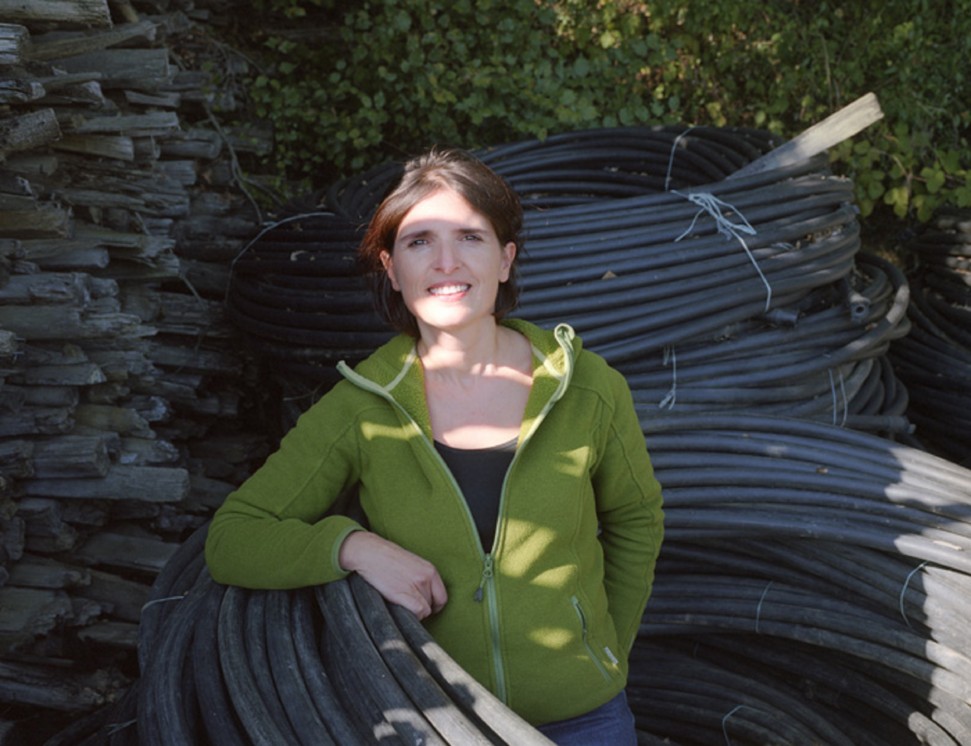
Christine has come a long way since those early days, and today she farms just over 56 acres of vines, all hand-harvested and tended without pesticides, herbicides or synthetic fungicides. Of that total, 44 acres are in appellation Madiran and 12 are in appellation Pacherenc du Vic Bilh (same area but dedicated to white varieties) for dry and sweet whites. Insofar as she works to refine Tannat’s inherently tannic grip, her red wines are modern in style, but she loses none of the textural density that made the grape famous. Her reds are rich, ripe, and round—and surprisingly elegant for wines of such scale. If it’s chewy deep dark intensity and savory flavors of cassis and black plum that you seek, go no further! I’ll add one more thing: if you are lucky enough to remember or know really good, old school Bordeaux, and are tired of the overworked and over-oaked concoctions coming out of so much of Bordeaux today, try Christine’s wine. It will renew your faith.
Christine received certification from Bureau Veritas for organic farming in 2014 (she is not certified by the USDA for America). She is a member of a group of organic growers in the Southwest known as A Bisto de Nas, and she is increasingly interested in biodynamic methods and in being as non-interventionist as possible.
The Wines
| Wine | Blend | Description |
|---|---|---|
| TanNat | Tannat | This comes from a small parcel Christine obtained in 2019 and immediately converted to organic farming. Vines were planted in the late 1990s. The wine is made in the opposite style of classic Madiran with a very short maceration (and no carbonic; the skins of Tannat are too fragile) followed by a short élevage in concrete. It's bottled as naturally as possible--no yeasting, SO2 or other additions, and bottled without fining or filtration. The CO2 that came about naturally during fermentation was purposefully not entirely voided to help with preservation. This wine is best decanted and served with a slight chill. 775 cases. Tech sheet here. Note that vintage 2023 saw a higher production, because all of the domaine's Tannat went into this cuvée. Shatter, frost, hail and mildew pressure wreaked havoc in 2023, the domaine's harvest of red grapes was around 5% of normal, and Christine produced no classic Madiran that year--all the Tannat went into the TanNat cuvée. The quality of the grapes was quite high, the short macerations and élevage in concrete remained the same, but the vineyard sources were obviously greater than normal and consequently the intensity of the wine transcended its typical juicy delightfulness. Indeed, the '23 TanNat stands out for its depth and drive. It benefits from aeration and should be decanted. |
| Madiran Classic | Based on Tannat with 20% Cabernet Franc and 20% Cabernet Sauvignon | This comes from 13.5 hectares of vines averaging 40 years of age--that is, altogether mature! Harvest is manual, fermentation is native, and the élevage takes place over 18 months in concrete vats. Best decanted well in advance. Production averages 3,800 cases. Tech sheet here. |
| Madiran Vieilles Vignes | 100% Tannat | From several parcels that total 7.5 acres. One parcel of roughly 1.25 acres is of pre-phylloxera vines more than 150 years old; the other parcels support vines that are at least 50 years old. Grapes are de-stemmed and the wine is raised in Bordeaux barrels, roughly 20% of which are new each year. Given several hours of aeration, this Tannat blossoms. In exceptional years, Christine will vinify the block of pre-phylloxera vines separately and bottle the wine as her cuvée Préphylloxérique. In all other years, the wine from these ancient vines goes into the vieilles vignes cuvée. Production averages 1,670 cases. Tech sheet here. |
| Pacherenc du Vic Bilh Sec | 70% Gros Manseng, 30% Petit Manseng | Madiran’s answer to Jurançon’s whites. But Madiran is further down off the Pyrenees than Jurançon (and Irouléguy), and Madiran’s Pacherenc wines tend to have more weight. This is raised on its lees in older barrels. It’s a shockingly fresh and vibrant wine with quite a compelling nose. Production averages 1,500 cases. Tech sheet here. |