Côte West, California
California and Washington DC regional sales only
| Country & Region | California |
| Producer | Bret and Kerrie Hogan |
| Founded | 2015 |
| Website | www.cotewestwine.com |
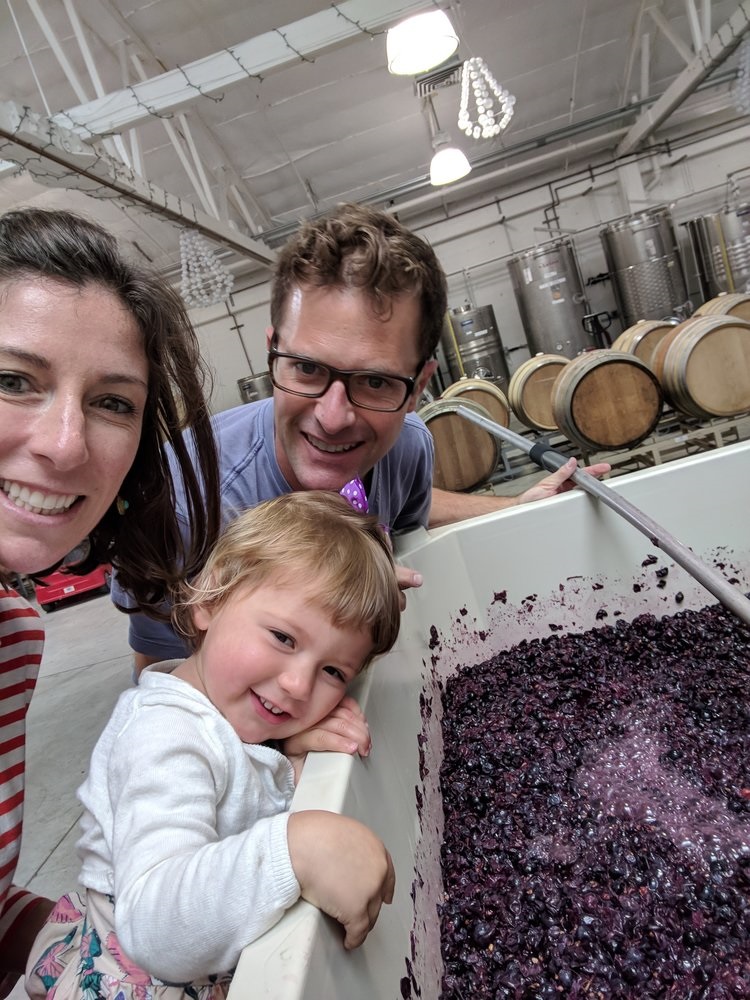
C ôte West is an urban winery in Oakland dedicated to new world wines with old world (read Burgundian) restraint, hence the name. It’s the brainchild of Bret Hogan, aided and abetted by his wife Kerrie, and they bottle around 1,200 cases of altogether delectable wine each year.
A native of Carmel Valley, Bret studied at Notre Dame with two semesters abroad in Angers, deep in the Loire Valley. Subsequently he did a semester in Paris, had a stint with Google (in its early days!), but home brewing led him astray to Davis, where he got a degree in viticulture and enology.
In the growing season of 2013, he worked at Domaine des Comtes Lafon in Meursault, where for five months he found himself at the right hand of Dominique Lafon and his cellar master, Thierry Jasnots. It was there that his ideas about wine and wine making solidified.
He returned and started Côte West. In rather short order, he moved into a warehouse space in Oakland that fifteen years earlier had been converted into a proper winery, with real floor drains and a slab completely oriented around them. Everything needed is there to make fine wine.
Except the grapes. Consequently, Bret spends an inordinate amount of time in the field with the growers he works with and amid the vines that carry his name. A key tenet is to pick early to keep the pH low in order to have vibrant and fresh aromatics and to keep SO2 additions to a minimum.
He’s very much on the vanguard of the new wave of California wine. He’s also, bless his heart, a pragmatist. Recently, Bret expanded his brand with Coterra, focusing on innovative natural winemaking. (While all of the Côte West wines are made with minimal intervention, the Coterra wines are fully “natural” in the sense of strict native ferments, no fining or filtration, with little to no sulfur added. In addition, the Coterra vineyard sources are either organic or on the path to organic farming.)
In his words, thoughts on yeast:
No hard and fast rules here. It really depends on each specific lot based on various factors. I’m very much a proponent of native yeast fermentations where I think they can be successful, but I have no hard and fast rules. Things I take into account are the assessed strength of native yeast in the vineyard, desired fermentation temperature, and desired style of wine. For example, I let the Grenache go native in open top fermenters because the vineyard owner of that Grenache says he can get his native Grenache ferments completely through at almost up to 16%! Since I’m picking much earlier than he does with a potential alcohol of 13 – 13.5%, I’m not afraid to go native here.
Pinot Noirs get a cold soak and start to take off with native yeasts around day 4 or 5; soon thereafter I add a commercial yeast. I let Chardonnay kick off spontaneously, but then add a commercial yeast originating from Burgundy to ensure varietal correctness. These native starts bring in a certain “je ne sais quoi” from the vineyard, though I don’t rely on them entirely in all cases.
I like to ferment Sauvignon Blanc and Rosés at very cold temperatures which would almost certainly inhibit a native yeast, so I use a commercial yeast on these from the get-go.
Orange wine and Pétillant-Naturel are both native ferments to respect the traditional processes for which these wines are so regarded. So I’m all over the spectrum on fermentation approach – really depends on each lot.
Thoughts on SO2 and additions:
My thoughts on SO2 are to keep additions to the lowest amounts necessary in order to not suppress the beautiful aromas. This is one of the reasons why I try to pick early to benefit from a low pH so that tiny SO2 additions are effective. While I respect the concept of 100% natural winemaking using sans soufre, I think the total lack of SO2 allows the wines to suffer. Water and acid additions I try my very hardest to avoid altogether. This is why I spend A LOT of time in the vineyards leading up to harvest, sampling the fruit at regular intervals and running analyses on the juices. The most important decisions made all year long are when to pick and you can stay truer to your ideal approach if you’re on top of your vineyard picks so that you don’t have to compensate for things in the cellar.
I don’t make additions to cold stabilize the whites and rosés. I put them through a traditional cold stabilization process using jacketed tanks. I struggle with this decision because the energy demand is significant in cold stabilization this way, but I feel better about that than dumping strange gums into the wine which consumers are going to drink.
The Wines
| Wine | Blend | Description |
|---|---|---|
| Cabernet Sauvignon Santa Cruz | Cabernet Sauvignon | The grapes are from Mariana's Vineyard in the Santa Cruz Mountains, which lies 1,700 feet up on the central ridge sometimes referred to as the Summit zone of the appellation. The soil is Madonna loam and sandstone. The vineyard had been an organic apple orchard for 50 years until the vineyard was planted in 2015. The wine is aged 18 to 22 months in 40% new French oak and 60% neutral French oak. About 130 cases annually. Tech sheet here. |
| Pétillant-Naturel Pinot Gris | Pinot Gris | The grapes come from the Heringer Family Vineyard in the Clarksburg appellation, which benefits from the cooling effects of both the Sacramento River Delta and the runoff of the San Pablo Bay. The soils are fertile from alluvial deposits, and the slow, even-ripening vines are perfectly suited to sparkling wine. Each bottle is hand riddled, forcing the yeasts into the neck. A few weeks later the neck of each bottle is submerged in dry ice to freeze the yeast. An ancient and manual method called à la volée is used to disgorge the yeast plug, and then the bottles are topped back up with more of the same wine, and a closure is put on them. It's a true labor of love, but once you try it, you'll see why it's worth all the work. Pét Nats are lively, fizzy, crisp, and fun. Tech sheet here. |
| Chardonnay, Sonoma Coast | Chardonnay | La Cruz is a sustainably farmed vineyard located in the Petaluma Gap. The multi-layered, mineral-laden clay soils were formed from ancient seabeds. The Chardonnay is planted on a beautiful slope facing the Petaluma River at the tip of the San Pablo Bay. The vineyard is influenced by the cooling influences of the Bay as well as an opening in the coastal hills to the northwest, both of which allow fog from the Pacific to flow freely through the vineyards. This cooler microclimate results in intense flavor development while preserving refreshing acidity. The wine is aged 18 months in 30% new French oak and 70% neutral French oak and spends six months in bottle before release. About 120 cases annually. The La Cruz Chardonnay embodies a meeting ground between white Burgundy and California Chardonnay. Tech sheet here. |
| Pinot Noir, Sonoma Coast | Pinot Noir | Gap's Vineyard is a sustainably farmed vineyard located in the Petaluma Gap. The multi-layered, mineral-laden clay soils were formed from ancient sea beds. The vineyard is influenced by the cooling influences of the San Pablo Bay as well as an opening in the coastal hills to the northwest, both of which allow fog from the Pacific to flow freely through the vineyards. This cooler microclimate results in more intense color and flavor development while preserving a refreshing acidity. The wine is aged 18 months in 30% new French oak and 70% neutral French oak and spends six months in bottle before release. About 100 cases annually. Undeniably Pinot Noir. Tech sheet here. |
| Grenache, Dry Creek Valley | Grenache | Mounts Family Vineyard is known for growing exceptional Rhône varieties. The rocky soils remind one of the Southern Rhône where large rocks at the base of the vines absorb the sun’s heat during the day and radiate the warmth to the vines during the cold nights. This Grenache is made from clone 362, a favorite among many winemakers of the 22 Grenache noir clones. The wine was fermented 100% whole berry with native yeasts and pressed to barrel (neutral French oak) for 11 months. The lees were gently stirred during the first month, and the wine was racked one time, a month before bottling. The resulting wine is all about texture and finesse. About 130 cases. Tech sheet here. |
| Rosé of Counoise, Dry Creek Valley | Counoise | Mounts Family Vineyard is located in Dry Creek Valley in Sonoma County and its third-generation growers were among the first in California to introduce Counoise to the region. The vineyard has striking red, rocky soils which are rich in iron volcanic deposits. With plenty of sun, this hardy vineyard site's Counoise was grafted to a devigorating rootstock to minimize yields with a focus on quality. The vineyard team makes multiple passes in the rows through the growing season to drop fruit. This rosé was made from whole cluster pressed Counoise, ideal for rosé. It is aged four months in stainless steel. About 170 cases annually. A versatile, dry rosé. Tech sheet here. |
| Skin-Fermented Pinot Gris | Pinot Gris | This Pinot Gris was grown in fine silt and clay loam soils in the Clarksburg appellation. It was picked early to capture its natural acidity and keep alcohol in check. Whole clusters were gently hand placed in a tank and left to ferment naturally for 20 days; the wine matured in neutral French oak. The extended period of skin contact gives the wine its unique amber hue; some call it ramato (copper in Italian). It delights with great acidity and grip on the palate. Tech sheet here. |
| Coterra Chardonnay | Chardonnay | This natural Chardonnay comes from pristinely farmed fruit from Gimelli Vineyard, an organic, dry-farmed site in the Cienaga Valley of San Benito County. The vineyard enjoys the maritime influence of Monterey Bay and boasts soils rich in limestone. The Chardonnay grown here is unique from our Sonoma Coast Chardonnay, with a singular mineral character and salinity. Native yeast, spontaneous malolactic fermentations, unfined, unfiltered. Smooth and round with notes of sea breeze, roasted lemon, and oatmeal spice. |
| Coterra Cabernet Pfeffer | Cabernet Pfeffer | Currently found exclusively in the Cienega Valley, Cabernet Pfeffer is an historic Bordeaux variety. These grapes come from beautiful, 140-year-old, organically farmed vines at Gimelli Vineyard. In the cellar, this wine sees very little intervention. Native yeast, spontaneous malolactic fermentations, unfined, unfiltered. Silky smooth with notes of bright berry and a touch of cherry cola. |
| Coterra Skin-Fermented Sauvignon Blanc | Sauvignon Blanc | This Sauvignon Blanc was grown in Pine Mountain Vineyard, which climbs up to 2,800 feet on a peak that rises above the northern edge of Sonoma Valley. The vineyard’s high altitude and late harvest deliver smaller berries and more intense aromas and flavors. The volcanic soils are well-drained and mineral rich. For this orange wine, the juice and wine remain in contact with the skins, seeds, and stems for 20 days before pressing. This gives the orange (or skin-fermented) wine tannin and enhanced varietal typicity. The wine is aged four months in neutral French oak. About 290 cases. Gentle tannins, good acidity, and a long finish. |