Champagne Roger Coulon, Vrigny
| Country & Region | France, Champagne, Vrigny |
| Appellation(s) | Champagne |
| Producer | Edgar and Louise Coulon |
| Founded | Family property since 1806. Edgar and Louise, the family's 9th generation, took the helm in 2016 and 2019. |
| Website | www.champagne-coulon.com/en |
These wines are all about the energy, the resonance, the sheer life force of life. Like copper wires pulsing with electricity. Like a cello solo in the Carnegie Hall. You feel it more than you drink it.
—Tamlyn Currin, jancisrobinson.com, June 2023
These are vinous, intensely flavored Champagnes of considerable character, lent a particular texture and grain by their emphasis on Meunier growing on sand, and I warmly encourage readers to try them.
—William Kelley, The Wine Advocate, December 2023
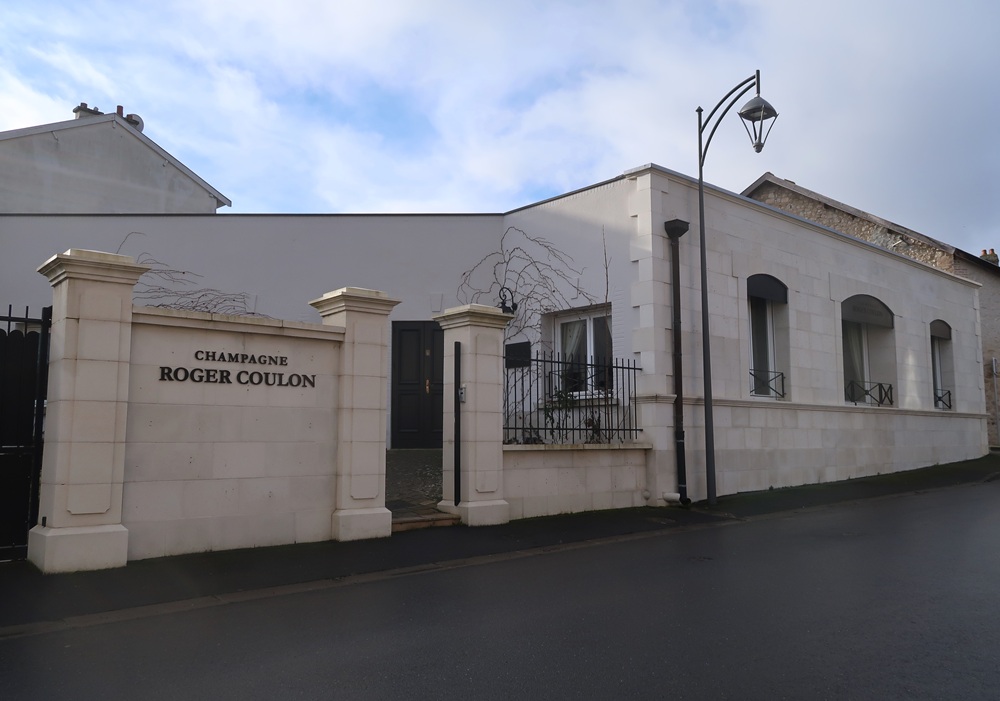
Champagne Roger Coulon dates back to 1806 and is run by the young brother and sister team of Edgar and Louise Coulon, the family’s 9th generation. What defines this domaine is its commitment to organic viticulture and agroforestry; an ethos of long élevages in wood followed by extended aging sur latte; bottling with low pressure and low, if any, dosage; and a lengthy post-disgorgement aging in bottle of one year before going to market (a period that is moving to two years). All of this is in service of having a more vinous wine.
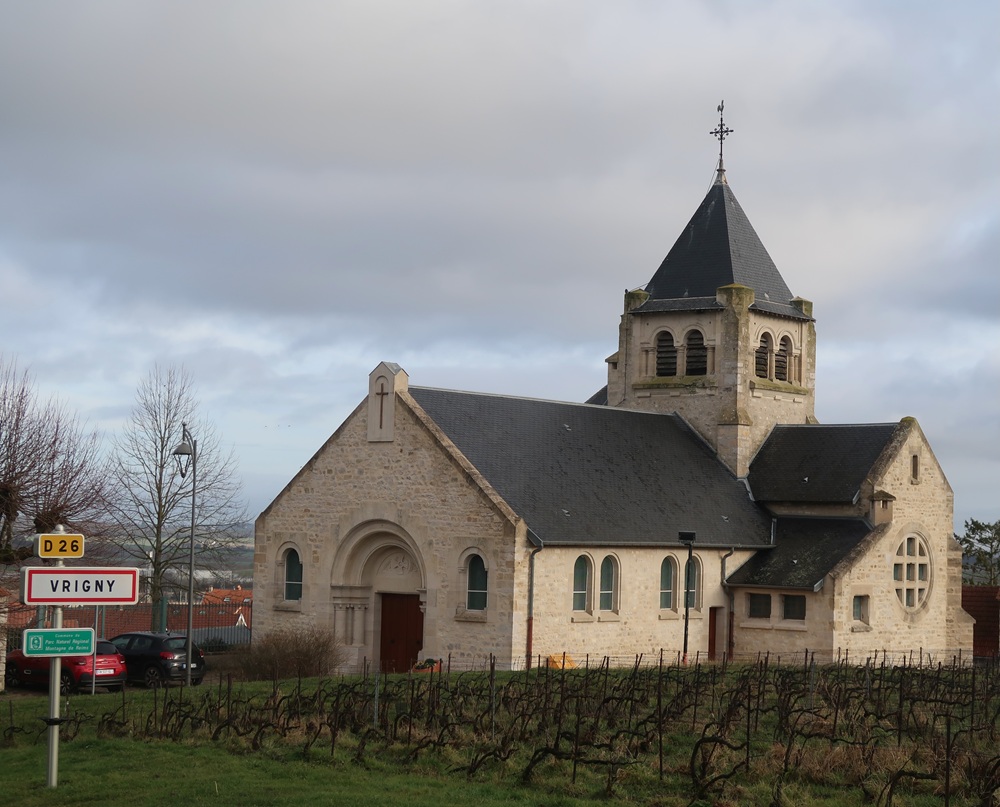
The domaine is on the northwestern slopes of the Montagne de Reims in the quiet premier cru village of Vrigny. Its vines are in or around their village, save for a Grand Cru parcel of Chardonnay in Chouilly. The parcels numbered 115 in 2026 and the surface was nearly 11 hectares, or 27 acres. The average age of vines across the board exceeds 40 years.
Roughly 50% of the family’s plantings are in Meunier, 25% in Pinot Noir, and 25% in Chardonnay with a smattering of Pinot Blanc, Pinot Gris and Petit Meslier. Ferments are spontaneous and now all in 205, 228 and 600L barrels (10-15% annual renewal). Élevages go over winter for 10-11 months and malolactic fermentation typically happens naturally before bottling en tirage and aging sur latte. There is no fining or filtration; SO2 additions are minimum; and bottling is done with 4.5 to 4.8 bars of pressure rather than the standard 6 bars.
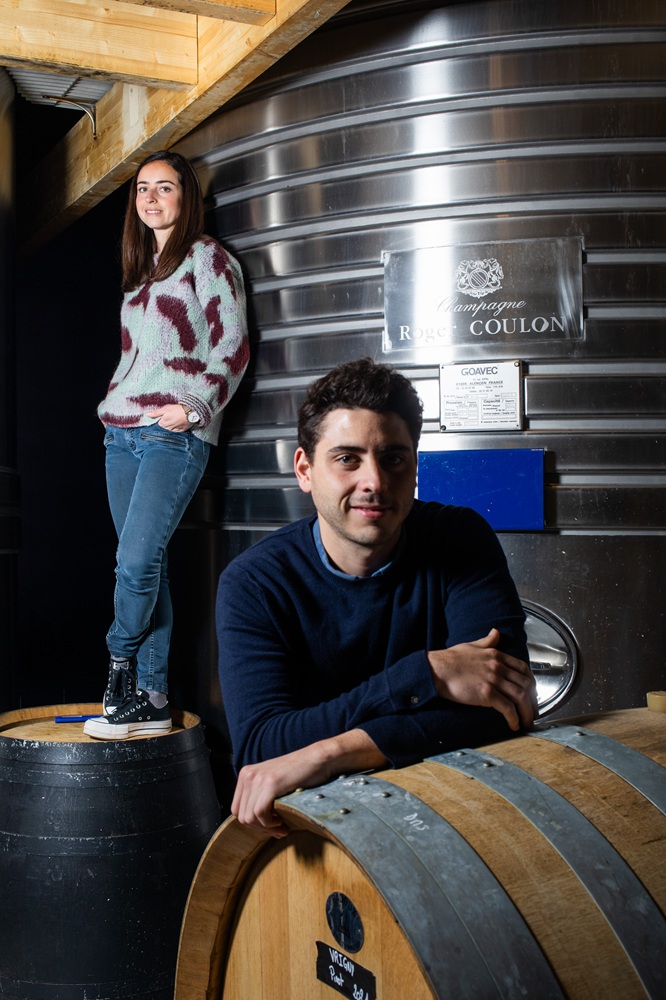
Edgar joined his parents on the domaine in 2016 after internships in Burgundy, England, Australia and New Zealand following his enology studies. He was instrumental in pushing his parents to go for organic certification, which began in 2019 and was awarded in 2022 (his father had always worked vines more or less organically, but never wanted to be confined by the regulations). In addition, Edgar introduced, or reintroduced as he would like to say, the principles of agroforestry. The Coulon forefathers had traditionally planted fruit trees along the edges of their vineyard parcels, and Edgar went back to this practice not simply for the fruit, but for the biodiversity that the trees brought both above and underground as well as the soil stabilization (which the root systems of fruit trees can contribute to without interfering with the roots of vines, whereas a larger system like that of an oak tree would). As well as fruit trees, they are planting hedges and utilizing cover crops. In the winter months, a flock of sheep graze in the Coulon vineyards.
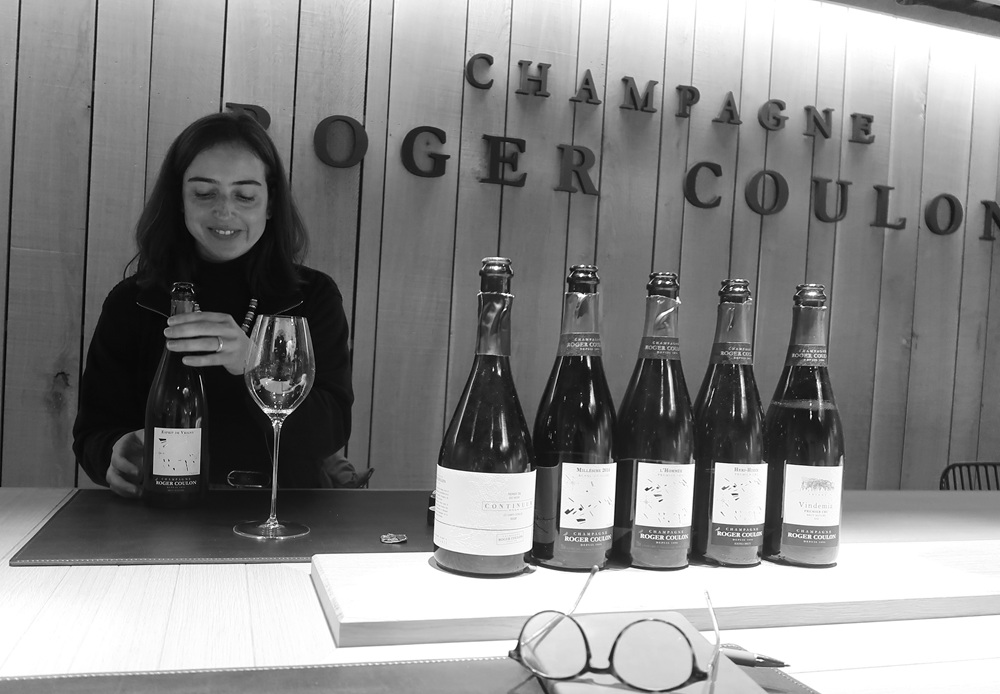
Edgar’s younger sister Louise joined in 2019 after studying economics and after obtaining a master’s degree in the wine and spirits business. In addition, she did a wine making internship with Domaine Ott in Provence. She runs the front of the house while Edgar runs the back, but it’s a small family domaine and they work closely together on all aspects of the business, above all on the wine making.
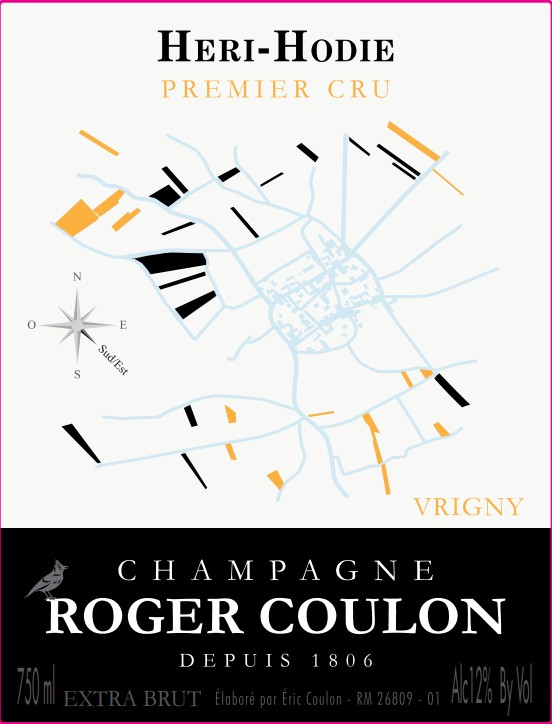
Their parents, Isabella and Eric, were founding members of Trait-d-Union, Champagne’s most elite group of growers. They also designed the label with its mosaic of black and gold vineyard parcels belonging to the Coulon family in Vrigny, with gold highlighting the parcels contributing to the cuvée in hand.
As to Roger Coulon, he was Edgar and Louise’s grandfather. He passed away at a young age and their father kept his name for the domaine.
The Wines
| Wine | Blend | Description |
|---|---|---|
| Vindemia NV | 60% Meunier, 40% Chardonnay | This is a wine of the new generation, a fine introduction to the Coulon range—and one that unfortunately fell astray of the American labeling authorities because Vindemia refers to harvest in Latin. That fact triggered a requirement for a vintage-dated wine, and this is decidedly not a vintage Champagne. Rather than doing a complete remake, Edgar and Louise decided to simply put the base vintage of the wine in quotation marks to satisfy the requirement. The first release was based half on 2021 and half on reserve wine from 2020. Longer-term, the aim is to have the base vintage make up closer to 70% of the total. The wine is entirely vinified in barrel and élevaged for 11 months, followed by three years on its lees en tirage. Current production is limited to several thousand bottles. Tech sheet from the domaine here. |
| Herie-Hodie NV | Meunier | If the family has a flagship cuvée, it’s this. Heri-Hodie (AYR-ee OH-dee-ay) is Latin referring to yesterday and today, and is a reference to Meunier, the traditional variety of the Coulon forefathers. Normally half of the wine comes from a perpetual reserve started in 1995 and half comes from the base vintage (those proportions can change if the base vintage gives a short crop, but that is the general rule of thumb). The base vintage of Meunier is fermented spontaneously in wood, aged over winter for 10-11 months, and then blended with the reserve wine from stainless steel before aging en tirage. Production averages 15,000 to 20,000 bottles. Tech sheet from the domaine here. |
| L’Hommée NV | 60% Chardonnay, 40% Pinot Noir | L’hommée is an old unit of measurement referring to the size of a vineyard plot a man could work in one day in the pre-mechanized era – essentially two-thirds of an acre. There have been vines growing in the parcels making up this cuvée prior to the Revolution, if not well before, and they are the oldest terroirs in the Coulon holdings. Most are in their commune of Vrigny, others are in neighboring communes, and the current crop of vines across them averages more than 45 years of age. Production averages 10,000 bottles. The wine is fermented spontaneously in wood, aged over winter for 10-11 months, and then blended before aging en tirage for five years on the lees. Tech sheet from the domaine here. |
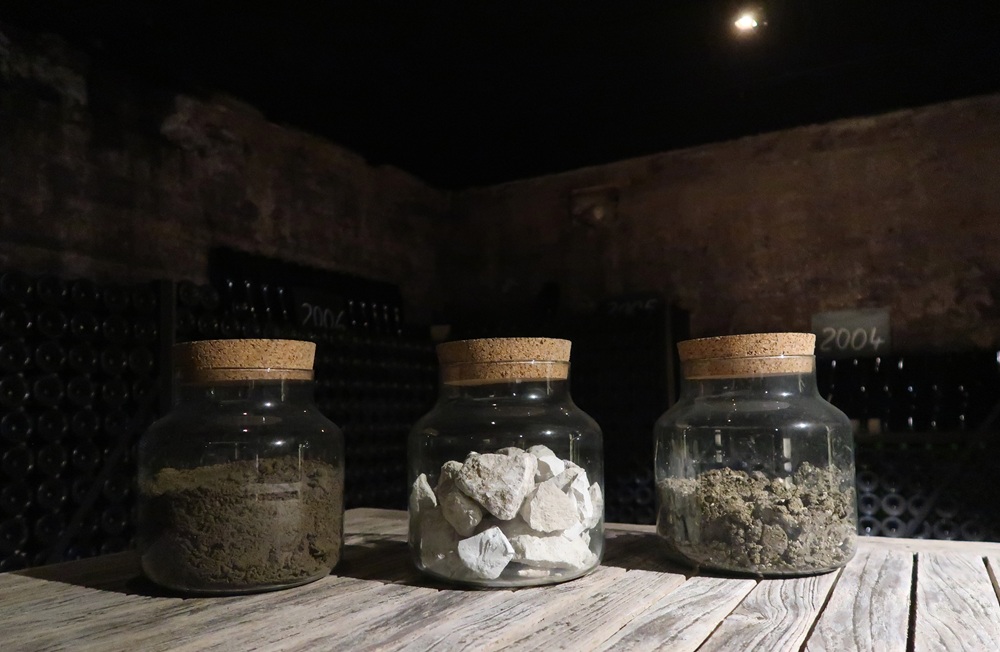
| Continuum NV | 65% Chardonnay, 35% Meunier | This wine came from ~60-year-old vines in one of the seven parcels farmed by the Coulons in Les Champs Chevalier, one of the oldest vineyards in Vrigny. It's where the commune's last massal sélection vines were planted (and are now being propagated). The vineyard faces east and grows in Vrigny's sandy soils over top of chalk. The wine fermented spontaneously without chaptalization and underwent natural malolactic fermentation. Élevage was in small Champenois barrels of 205 liters (mostly neutral) followed by 156 months--13 years!--sur latte aging on the lees. The wine is a blend of the 2008, '09, '10 and '11 vintages. Note that this cuvée is particularly unique: it's a one-off; the parcel was replanted in 2012 to Pinot Noir. Some 4,000 bottles were produced without any dosage. Tech sheet from the domaine here. |
| 2014 Blanc de Noirs | 50% Meunier, 50% Pinot Noir | From just over one acre of Meunier planted on its own roots (aka, franc de pieds) in 1959 in Gueux's Les Linguets vineyard, and from just over an acre of 1980 Pinot Noir vines in Vrigny's Les Limons vineyard. The Meunier faces southeast; the Pinot Noir faces north. The wine fermented spontaneously without chaptalization and without malolactic fermentation. Élevage was in steel for ten months followed by a minimum of 110 months of lees aging sur latte. No fining or filtration, and bottled with a dosage of 2 g/liter. Some 7,000 bottles were produced. Tech sheet from the domaine here. |
| 2022 Rosélie Rosé | Meunier | A rosé de saignée from 30 and 51-year-old vines in Vrigny. Half of the harvest was de-stemmed, half left whole bunch. The wine fermented spontaneously without chaptalization and with full malolactic, élevage went over winter 8-10 months in steel, and aging on the lees sur latte lasted 36 months. The wine was bottled without fining or filtration or dosage. The name Rosélie is a contraction of rosé + caudalie, a French term referring to length and persistence in wine. Some 5,000 bottles were produced. Tech sheet from the domaine here. |