Via Alpina/Dalia Maris, Friuli
Washington DC Regional Sales Only
| Country & Region | Friuli, Italy |
| Producer | Giampaolo Venica |
Giampaolo Venica is a fourth-generation Venica to have a role in managing the venerable Friuli estate of Venica & Venica, but it’s the wine he makes under his own labels that allow this searching man to fully explore his native land. Friuli occupies the far northeast of Italy, a sea-to-plain-to-mountain corner bordering Slovenia and Austria, and one of Italy’s prime white wine regions (an honor shared with Trentino and Campania). Giampaolo’s wish is to showcase Friuli through his medium of wine.
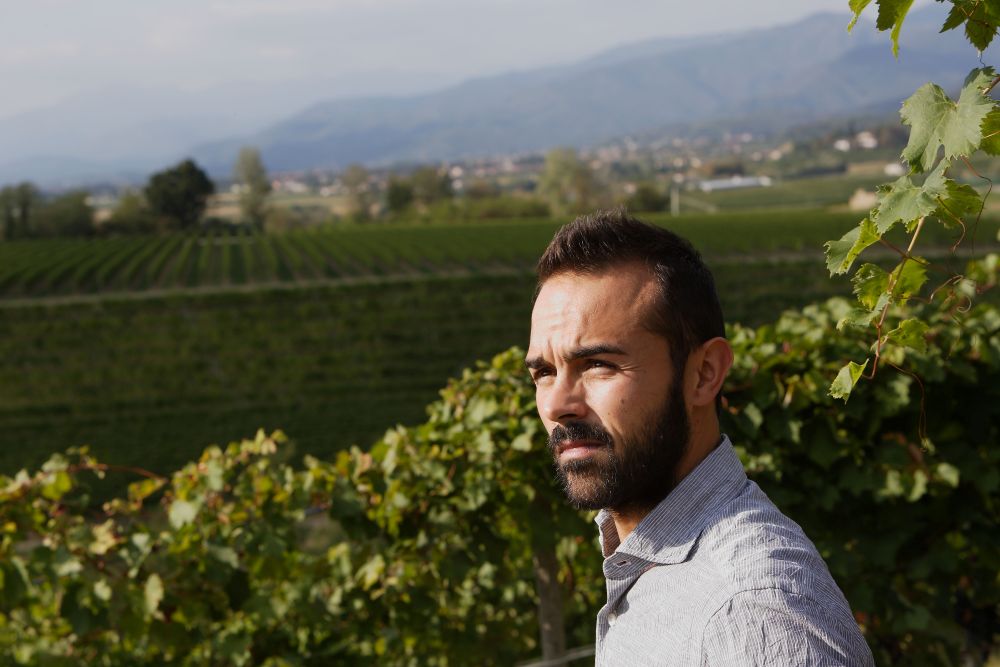
He has two labels. Via Alpina, referring to Alpine Trail; and Dalia Maris, a name inspired by his grandmother Dalia and the Latin Stella Maris, which refers both to the Virgin Mary and (more relevantly) to the north star and its importance to navigation.
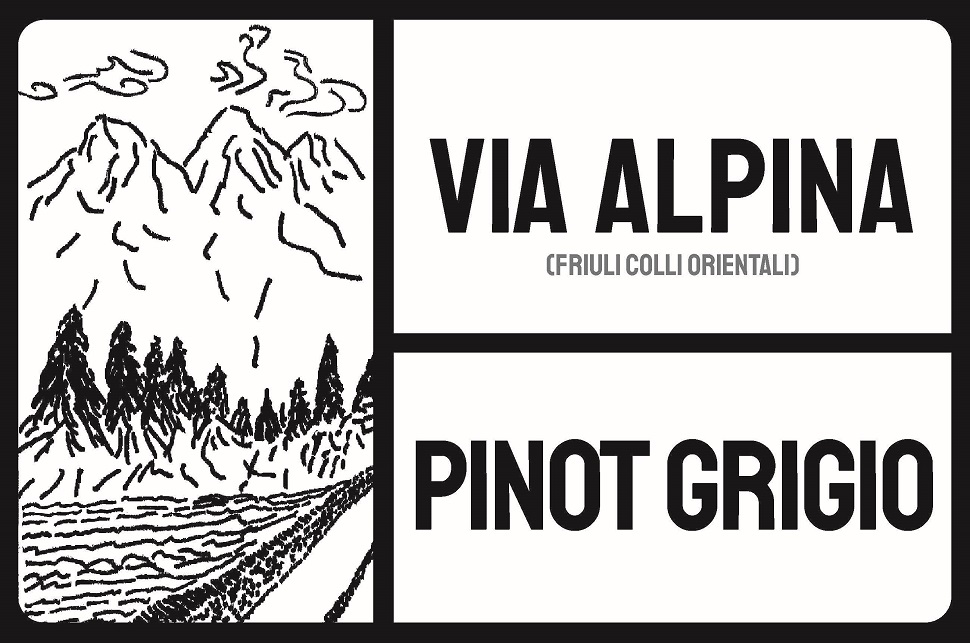
Via Alpina comes from small organic vineyards in the cooler sites of the Colli Orientali appellation, i.e., the uplands and the foothills of the Julian Pre-Alps that sprout up from the Adriatic plain north of the city of Udine. Be it Sauvignon, Pinot Grigio, or Ribolla, these are fresh and delicious examples of Friuli at remarkable everyday prices.

Dalia Maris is the more serious range and owes much of its inspiration to the Hermitage blanc made by Jean-Louis Chave. Giampaolo worked three harvests chez Chave and came away convinced that Jean-Louis’ white wine has a singularly profound terroir expression. This made him consider Friuli’s indigenous varieties of Tocai Friulano and Ribolla Gialla (and later that well established outsider, Sauvignon Blanc), and how specific virtuoso vineyards might best express Friuli’s terroir of flysch soils buttressed by significant diurnal shifts. Searching for such vineyards, his criteria were simple: trustworthy farmers, old vines in excellent sites, farmed organically or biodynamically.
Given that Friulano is a powerful varietal like Marsanne and Roussanne, Giampaolo raises his Friulano in barrels he gets from Jean-Louis. He hand-harvests when the grapes are fully mature, and aims to have the saline minerality of the old vine fruit offset the lower acidity, similar to the structure of Chave’s white Hermitage.
In the cellar, the grapes are pressed very slowly, be they de-stemmed or whole cluster; ferments are spontaneous; and, of course, SO2 additions are minimal.
The Wines
| Wine | Blend | Description |
|---|---|---|
| Via Alpina Pinot | Pinot Grigio | These vines typically range from 12 to 25 years of age. The grapes are de-stemmed without maceration, pressed gently and slowly, and the wine ages for eight months in steel on its fine lees with an occasional stirring. Via Alpina’s rendition is notably fresh and lively. |
| Via Alpina Ribolla Gialla | Ribolla Gialla | A local native appreciated for its transparency—soil can sing through this varietal. Its aromatic profile is mild, its inherent acidity is strong, and it can have a tannic structure. Giampaolo presses his grapes whole cluster and ages the wine for seven months in steel. |
| Via Alpina Sauvignon Blanc | Sauvignon Blanc | An aromatic grape brought over from France ages ago (could have been centuries), it does well in Friuli, especially when grown on cooler northern and eastern facing sites—which Giampaolo favors. In addition, his sites have various clones to add complexity. These vines are 15 to 20 years old. The grapes are de-stemmed without maceration, pressed gently and slowly, and the wine ages for eight months in steel on its fine lees with an occasional stirring. |
| Dalia Maris Cru B | ~85% Friulano, ~15% Ribolla Gialla | This comes from hills overlooking the village of Buttrio, a warm zone within the Colli Orientali, hence the “B” of the label. The blend is approximate—there could well be a higher percentage of Friulano—because the plots are field blends and the vines are 60 to 80 years old. Hand harvested, co-fermented spontaneously, the wine is aged in older barrels for 12 months before being racked to steel to rest ~12 months before bottling. Note that in certain years B is replaced by R, because in that year the source of the grapes came from the commune of Rosazzo. |
| Dalia Maris Piccolo | ~80% Friulano, 20% Ribolla Gialla | In some years, Giampaolo bottles what he calls Piccolo. It is a blend of the same grapes and same plots that are used for the Cru bottling but put aside to prioritize the best for the Cru wine. Here he borrows another practice from Chave: vinify each plot separately, evaluate the quality, and blend to achieve the best complexity. |