Champagne Laborde, Nogent l’Abbesse
| Country & Region | France, Champagne |
| Appellation(s) | Champagne |
| Producer | Delphine and Pierre-Emmanuel Laborde |
| Founded | 2017; family has been growing grapes in the region since at least 1789 |
| Website | champagnelaborde.com |
C hampagne Laborde is quite clearly one of the rising stars in the region and I cannot emphasize enough how rewarding it will be for readers who take the time to find the couple’s wines today and start to enjoy them. The Laborde wines are clearly built to age long and gracefully, but start out life so seamlessly balanced that they provide immediate enjoyment right out of the blocks!
—John Gilman, View from the Cellar, September-October 2024
“Finally, there’s a small area east of Reims known as the Monts de Berru, an isolated and little-known hill of chalk capped by sand, limestone, and clay.” Such is the extent of mention the area receives in Peter Liem’s authoritative 2017 book, Champagne, despite the fact that this little outpost east of Reims is one of the oldest vineyard sites in Champagne. Why the scant reference? Probably because the zone’s growers are content to sell their crop to the co-ops. Only three among the 210 growers are independent récoltant-manipulants, and only one is a star in the making.
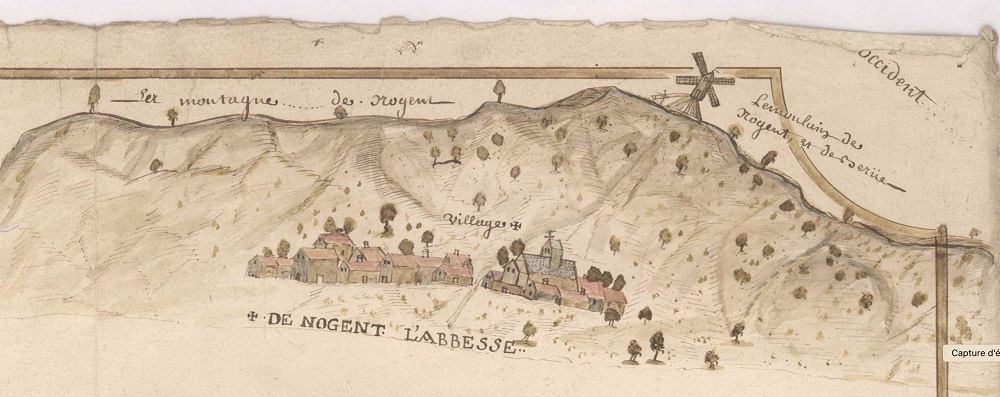 Nogent l’Abbesse in 1715, then and now the most important village in Monts de Berru.
The early Middle Ages saw vineyards established on the south side of the Monts de Berru—then known as the Montagne de Nogent and recognized by the windmill on its crown—by the Benedictine Abbey of Saint-Pierre-les-Dames. Founded as early as the 6th century, the abbey had notable trappings of power: its main digs were just around the corner from the great Cathedral of Reims, and Marie de Guise, second wife of James V and mother of Mary, Queen of Scots, was buried there (the abbey and its gardens were destroyed during the Revolution to make way for the appropriately named rue Marie-Stuart). Her sister was the abbess, and this sister, like previous abbesses, maintained two wine presses and a convent in Nogent l’Abbesse. The village owes its name to the abbey—nogent is a corruption of nos gens, or our people; “our people of the abbey” would be the full translation.
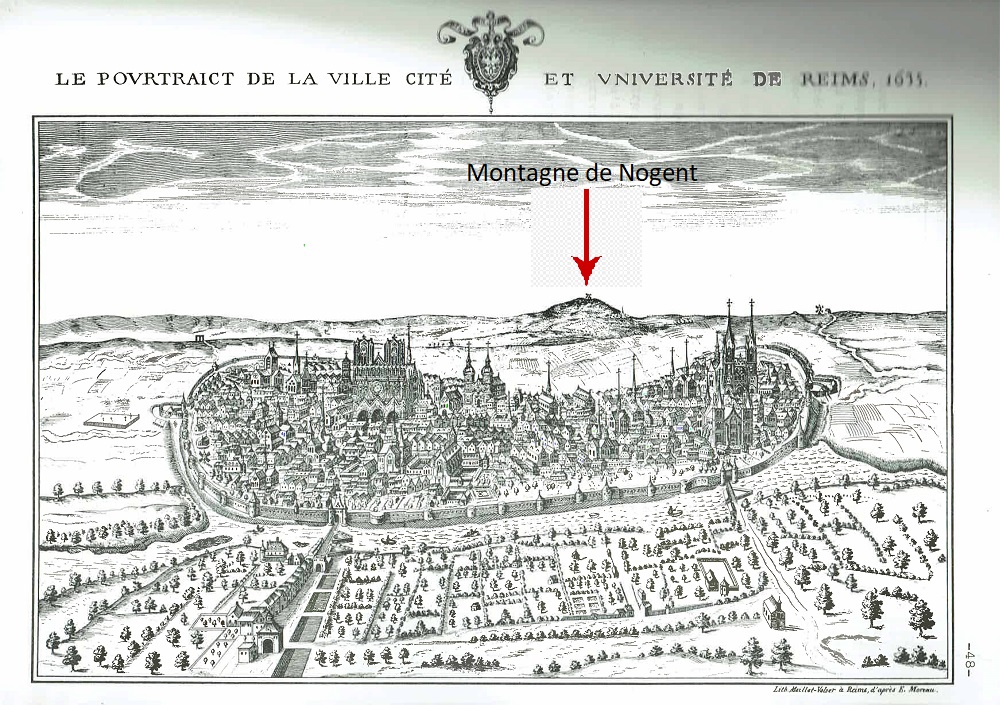
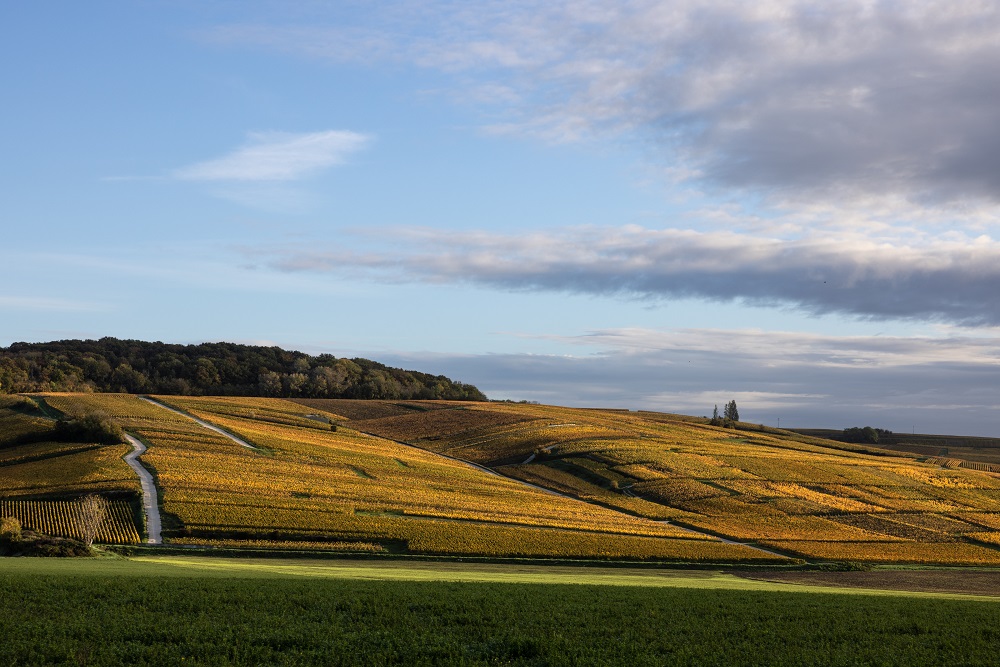
Sporting impressive south-facing chalk slopes a two-hour wagon ride from Reims, the Montagne de Nogent was an ideal site for the abbey to plant vines. This outcropping of chalk was once part of the Montagne de Reims—only 8 kilometers separates Nogent from the grand crus of Mailly-Champagne, Verzenay and Verzy, and the Campanian chalk underlying them all is the same. The valley between them came about with erosion. The real difference is exposition: Nogent’s hillsides face south-southeast; those across the valley on the Montagne de Reims are primarily north-northeast facing. And today Nogent is planted almost entirely to Chardonnay, whereas the communes across the way are known primarily for Pinot Noir.
Since at least the Revolution and probably longer, Delphine Laborde’s family has farmed grapes and made wine in Nogent l’Abbesse (what they made back in that distant day was still wine). Just prior to phylloxera, the village inhabitants cultivated some 100 hectares of vines, and what little survived at the beginning of the 20th century—one account states a mere three hectares—is thanks to the tenacity of Nogent’s growers (in the two other villages anchoring the mountain, Berru and Cernay-lès-Reims, vines disappeared entirely during the phylloxera pandemic).
Their determination became all the more remarkable when the First World War erupted and the German army occupied the strategic hilltop. Women maintained the vines when possible; the men were sent off to work in sawmills occupied by Germans. Reims sat 15 kilometers away, the front line ran in between, and by the war’s end in 1918 Nogent l’Abbesse lay in ruins from shelling. Delphine’s maternal great-grandfather rebuilt the house where she lives today.
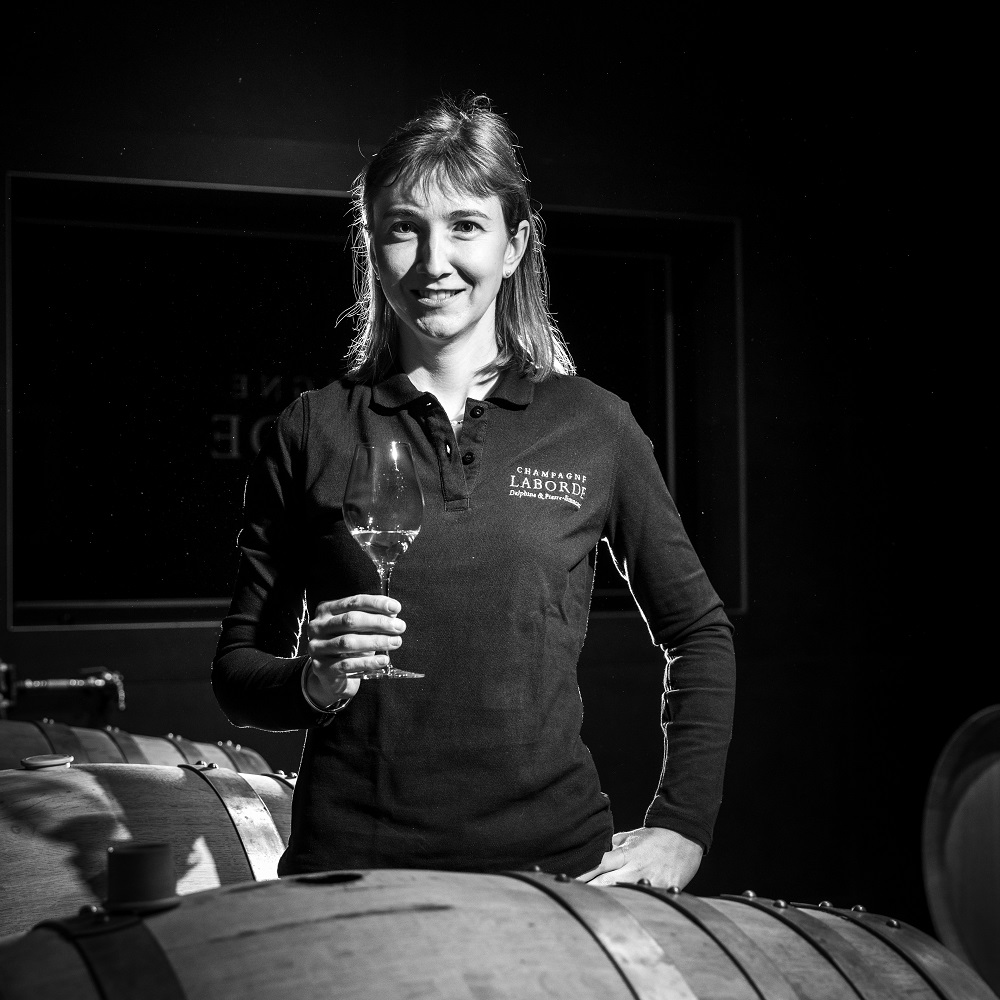
Both sides of her family cultivated vines and her grandfather made his own Champagne until joining the co-op in the early sixties. Delphine grew up surrounded by vines and farming. With degrees in agriculture and oenology, she joined Bollinger in 2007, reporting directly to the cellar master while also working on progressive viticultural projects (from the first, she’s loved viticulture as much as winemaking). After three years with Bollinger, she did a stint with the CIVC, managing viticultural research and communication projects. In 2012, she joined Veuve Clicquot’s oenology team, rising to head winemaker of the house’s Côte des Blancs holdings. She was also a member of Clicquot’s tasting and blending committee. As with Bollinger and the CIVC, she worked on viticultural projects. Her talents were such that Clicquot put her on winemaker tours in Europe and the US as the spokeswoman for the house (one has to imagine that the Widow Clicquot, who opened the Russian market in her day, would have approved).
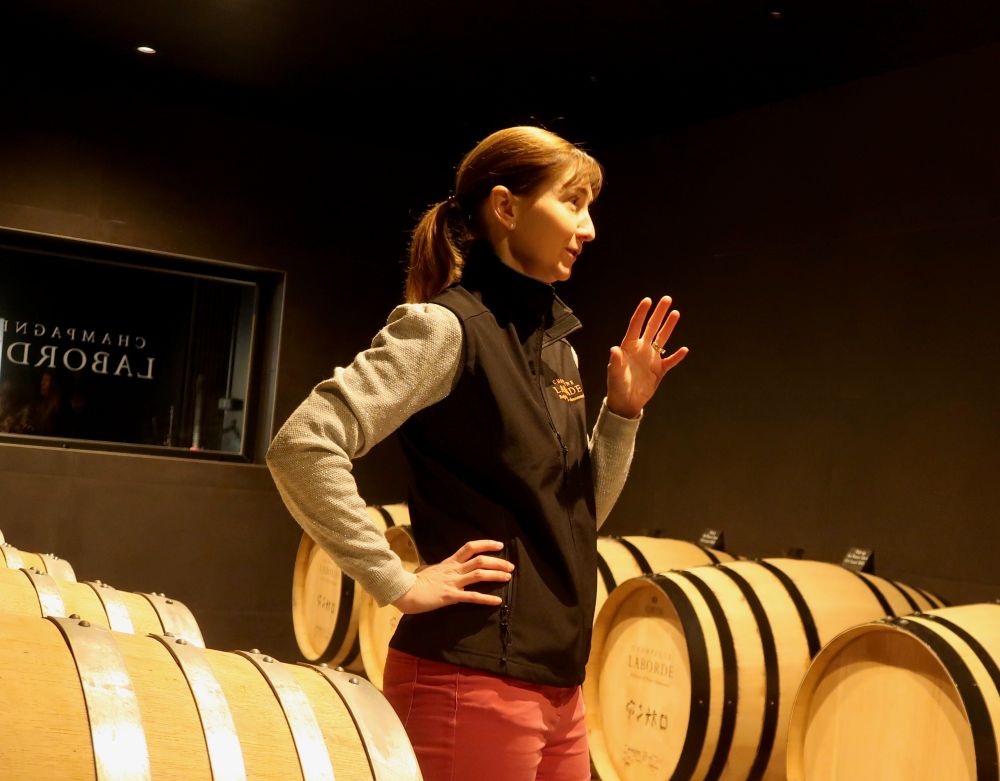
She bid adieu to Clicquot in 2020, but her exit had long been planned. She was always going to return to Nogent l’Abbesse; she wanted to put her historic little commune back on the map, a wish she’s nurtured for all but forever (she’s said that she would like to do for Monts de Berru what Champagne Jacques Lassaigne has done for Montgueux). It was only a matter of when her family’s vines came up for inheritance, followed by when contractually Delphine could withdraw from the co-op (a more difficult transition than the inheritance).
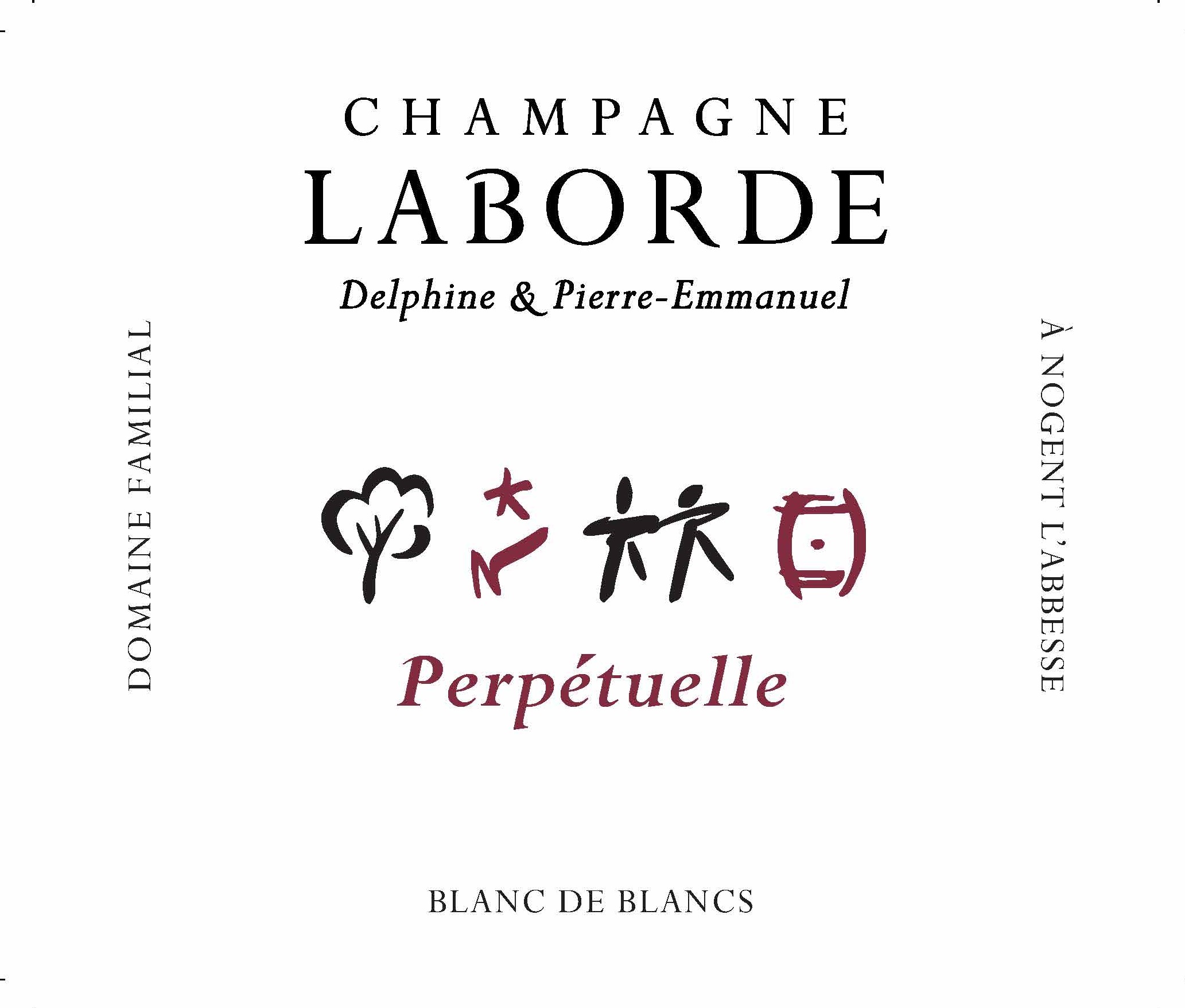
She’s been aided and abetted by her husband, the Burgundian Pierre-Emmanuel. His family has a patch of vines in the Hautes-Côtes, but it wasn’t enough to start anything with, and he ended up being a banker in Paris. As a profession, he found it lacking. Starting a family with Delphine, on the other hand, was something else altogether. Plus, he parlayed his banking skills into a loan that enabled them to build and equip a small state-of-the-art cellar behind the house, three half-levels deep, so that all aspects of winemaking could be done by gravity. He also undertook a two-year course at the Avize winemaking school. At home, he is her husband; at work, he is her colleague. The logo they chose for their domaine has four symbols: one each for nature, terroir, two people and vinification.

They started in 2019 with 5 hectares. Today, they have just over 14 (35 acres), mostly in Chardonnay with a 0.61-acre plot of old Pinot Noir planted in the early 1970s. The vast majority of this surface is composed of mature vines, some 30% of which are sélection massale plantings, and the holdings are concentrated in Nogent l’Abbesse with a handful of parcels in Berru. In the vines there is no use of chemical fertilizers, herbicides or insecticides. Plowing is adapted to each parcel and when employed is shallow to preserve microbial life in the soil. From the beginning, Delphine and Pierre-Emmanuel planted cover crops and spread mulch to improve the health of their soils, as well as planted hedges and installed beehives and insect hotels to encourage biodiversity. The top of the mountain (where that long-ago windmill once stood) is now a national park with a huge forest, and they consider their vines to be part of this ecosystem.
In 2025, they underwent their first carbon footprint assessment, and their measurable CO2 emissions came in under 16% of the average Champagne producer. They credit their low use of inputs in the vines and cellar, their hedges and cover crops, the underground winery (low energy needs), and their use of a lighter bottle made of 86% recycled glass.
In that same year, they chose a half acre parcel in Nogent l’Abbesse to plant the old varieties of Champagne: Arbane, Chardonnay Rose, Meunier, Petit Meslier, Pinot Blanc, Pinot Gris and Pinot Noir. This could become a single-plot wine in the future.
In the cellar, only the first pressing of the grapes is used while all subsequent ones (what they call the taille) are sold off. The aim of all ferments is to be spontaneous, which invariably happens with the single-vineyard wines and with wines fermented in wood; for other wines in tank, it can be a case by case basis if the harvest came in spotty and if a given tank was slow to start (in such circumstance, Delphine might add yeast to avoid oxidation). Élevages are nice and long, lasting until May following the harvest, whereupon the wine is bottled sur latte to age on its lees.
Champagne Laborde released its first wines in early 2023. Two years later, they were accepted into the prestigious grower group known as Passion Chardonnay (a group that includes Bertrand Lilbert), making Champagne Laborde the 12th member.
The Wines
| Wine | Blend | Description |
|---|---|---|
| Perpétuelle NV | Chardonnay | The flagship wine of the estate and its main production, this blancs de blanc comes entirely from vines in Nogent l’Abbesse and is vinified parcel by parcel. A strong third—as much as 40%—of the blend is from their perpetual reserve held in tank (which started its life in 2018). Following a good eight months of élevage in tank with a small proportion raised in 300L barrels, the wine is bottled and aged on its lees for 2.5 to 3 years before disgorgement. Dosage hovers around 5 g/l, but see back label for the exact figure. The allocation for America in 2026 amounted to 160/6 packs. This is Delphine's most complete expression of Nogent l'Abbesse.Tech sheet here |
| Brut Nature | Chardonnay | This is the Perpétuelle cuvée with a minimum of one extra year of aging on its lees in bottle sur latte and bottled without dosage. Delphine's intent is to have a wine that makes a wonderful pairing with oysters, raw fish, and Japanese dishes. Tech sheet here |
| Tandem NV | Pinot Noir and Chardonnay | Chardonnay from Nogent l’Abbesse with old-vine Pinot Noir from Berru. Vinified parcel by parcel and blended with as much as 45% of reserve wine. Eight months of élevage in tank followed by two years of aging in bottle on lees before disgorgement. Brut in the low range of dosage (see back label for the exact figure as well as proportions of varietals). The allocation for America in 2026 amounted to 80/six packs. Tech sheet here |
| Terre d'Abbaye | Chardonnay | This is Delphine's tribute to the Royal Abbey of Saint-Pierre-les-Dames in Reims, which maintained vines in Nogent l'Abbesse from at least the 6th century until the French Revolution. The vines are all in Nogent l'Abbesse and this, like all of her wines, is made only from the first pressing of grapes. The wine fermented spontaneously in 300L barrels and was raised in said barrels. It's all from one vintage but not declared because the wine didn't spend a full three years en tirage, so look for the vintage on the back label. Dosage is around 4 g/l and the back label will specify the exact figure. The allocation for America in 2026 amounted to 30/6 packs. |
| Rosé NV | Pinot Noir and Chardonnay | Pinot Noir from their early 1970s-era plantings in Berru combined with Chardonnay from Nogent l’Abbesse. Parcel by parcel vinification and blended with around a third of reserve wine. Elevage in tank, with bottling in May to age for two years on the lees before disgorgement. The 12% of still Pinot Noir added for color and flavor is made in house following Burgundian methods (de-stemming, cold maceration, slow fermentation with pumping over, racking, and aging in tank--and the quality and sheer tenacity of this old vine Pinot Noir is immediately evident in the wine). This rosé is only made in very good years, and in terms of power, structure, and elegance, this is quite a distinctive wine. Brut in the low range of dosage (see back label for the exact figure as well as proportions of varietals). The allocation for America in 2026 amounted to 60/6 packs. Tech sheet here |
| Vintage Les Écus Extra Brut | Chardonnay | From a single parcel planted in 1982, high on the Nogent hillside up against the crown of forest (which is a 500-hectare nature reserve). The parcel is 0.32 hectare or 0.79 acre of sélection massale vines, facing east. Raised in steel until May after the harvest, then in bottle on its lees for three years before disgorgement. Brut in the low range of dosage (see back label for the exact figure). First year production: 2.090 bottles. Tech sheet here |
| Vintage Les Beaux Lieux | Chardonnay | Despite its plural name, this is a single-site wine from 1.1 acres of sélection massale vines planted in the early 1970s. The parcel sits high on the slope under the crown of forest with a south-southeast exposure (where one has a magnificent view of the vines of Nogent l'Abbesse, the Montagne de Reims and the city of Reims, hence the plural in the old French lexicon). Like all of her wines, Delphine uses only juice from the first pressing for this, followed by native ferments and a long eight-month élevage, and then aging on the lees in bottle for four years before disgorgement. Dosage hovers around 4 g/l but check the back label for the exact figure. The allocation for America in 2026 amounted to 40/6 packs. |