Château de Monteberiot, Côtes de Bourg
| Country & Region | France, Bordeaux |
| Appellation(s) | Côtes de Bourg |
| Producer | Marie-Hélène Leonard and Gilles Marsaudon |
| Founded | 2002 |
| Website | www.monteberiot.com/en/ |
M arie-Hélène Leonard and Gilles Marsaudon bought Monteberiot in 2002. She had been in sales in Cognac and in the UK, then in Bordeaux; he had been in wine marketing in Bordeaux. The natural beauty of Côtes de Bourg stole their hearts—the region is called Bordeaux’s little Switzerland due to its stunning views over the estuary—and they were able to afford Monteberiot and its 25 acres because it was in such a state of disrepair.
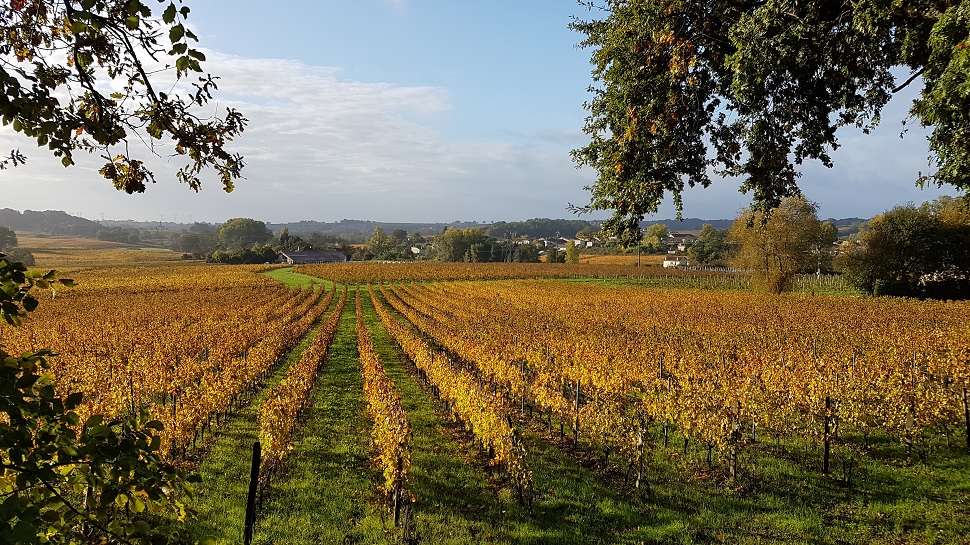
Marie-Hélène enrolled in a viticulture and wine management course while Gilles went in search of help with the replenishing of the vineyards and the renovation of the buildings. He found a vineyard expert, subsequently an enologist (both of whom still work with the domaine), and the first winter Marie-Hélène and Gilles cut their vines back severely. That season and in the years to come, they spread over 130 tons of natural compost on the soils. Posts were replaced, trellising restrung, and the winery was rebuilt and upgraded while the concrete vats were revamped. Vineyards were replanted (today, they account for 15 of the domaine’s 25 acres). Perhaps most importantly, the couple embarked on an organic footing, and they received certification in 2022.
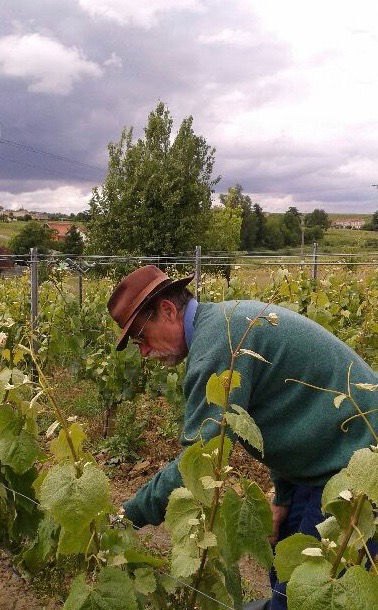 Their vines are in the hamlet of Mombrier in the heart of Côtes de Bourg, a compact, hilly appellation that faces Margaux across the water. To the north sprawls the much larger appellation of Blaye Côtes de Bordeaux, which is often confusingly lumped with Bourg despite the fact that the Blaye AOP is more than three times as large and much of its acreage is inland. Bourg the appellation sits perched over the confluence of the Dordogne and Garonne Rivers, at the beginning of the vast Gironde estuary. The Dordogne flows out of the Massif Central, the Garonne out of the Pyrénées, and the Gironde Estuary is western Europe’s largest. Bourg itself was an important Roman port and Romans planted vines in its hills during the 2nd Century AD, long before the inhabitants of the Médoc Peninsula turned to the cultivation of vines.
The appellation’s hills rise to 200 hundred often steep feet, in contrast to the gravel plains of the Médoc. Forming a natural thermal buffer, the estuary gives Bourg an enviable degree of protection against frost, and the appellation further enjoys around 10% more sunshine and 10-25% less rain than other parts of Bordeaux. The soil is clay on top of limestone, and the bedrock has been measured as thick as 66 feet.
There’s a movement afoot to restore some of Bourg’s Malbec (a.k.a., Cot) plantings. Historically, Bourg may well have had the lion’s share of Bordeaux’s Malbec—its clay soils are a good match for the variety—and nurseries from Cahors and Bordeaux have been working steadily to propagate top plant material. Marie-Hélène and Gilles have taken advantage of this with new plantings of the variety. Currently, Malbec accounts for some 10% of Bourg’s total plantings (pre-phylloxera, one source puts the Malbec figure at closer to 80% of Bourg’s total). The grape is prized for its deep color and spice.
The Wine
| Wine | Blend | Description |
|---|---|---|
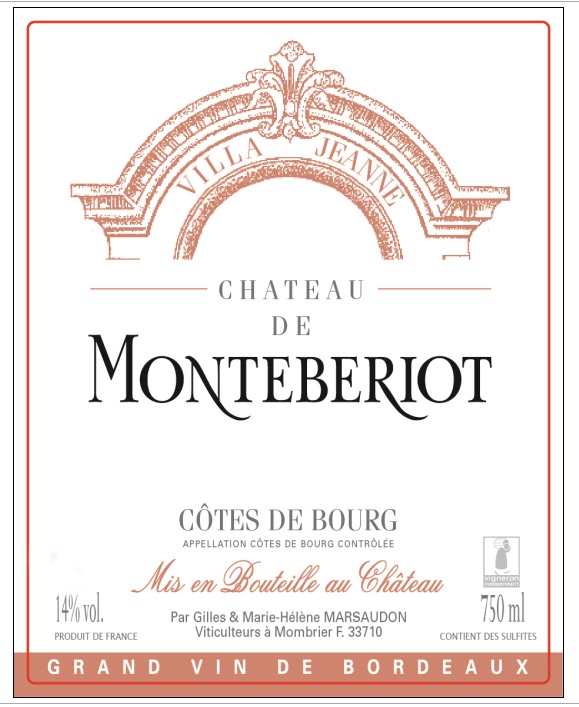
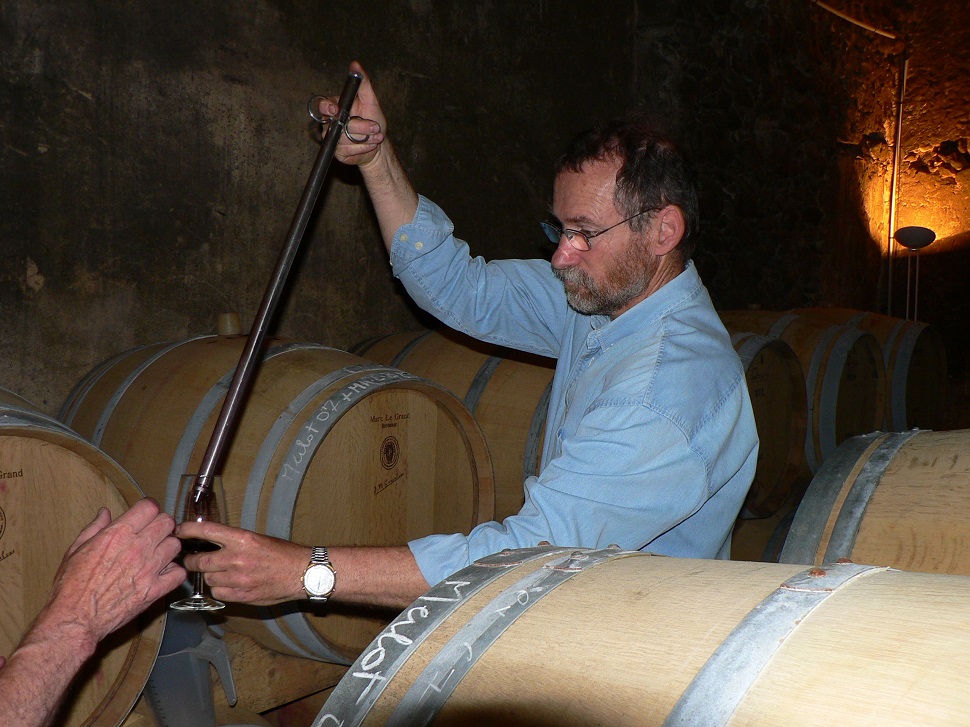
| Villa Jeanne | 70% Merlot, 20% Malbec, 10% Cabernet Franc | This is Marie-Hélène and Gilles’ classic cuvée and their most important wine. It comes from 7 of their 15 acres. The wine ferments in concrete, and just under half is brought up in 1-2-year-old barrels while the rest ages in concrete. No fining; just a light filtration. Production averages 1,300 cases. Tech sheet here. |