Deovlet Wines, California
California and Washington DC regional sales only

| Country & Region | California, Santa Barbara |
| Producer | Ryan Deovlet |
| Founded | 2008 |
| Website | deovletwines.com |
A nother brilliant lineup from winemaker Ryan Deovlet, these wines unquestionably rank with the best from the region. …These are incredibly complete, balanced, singular wines that readers should snatch up.
-Jeb Dunnuck, August 2022
Ryan Deovlet makes precise wines that reflect the same sense of relaxed, comfortable personality that Deovlet himself does… The most interesting part of Deovlet’s winemaking is his deft use of various aging vessels in unconventional settings: terracotta amphora for Cabernet, steam-bent cigar-shaped oak barrels for Chardonnay, etc. This experimental spirit never tips the wines into “natty” territory, instead lending them purity and clarity while allowing the sites to speak. You can’t go wrong with this range.
—Billy Norris, Vinous Media, September 2026
In 2004 Ryan Deovlet traveled to Australia to work in vineyards under the auspices of World Wide Opportunities on Organic Farms. He went to find life after baseball, hoping that agriculture might fit the bill. He had been an infielder in the semi-pros, but an arm injury closed the door to the majors, a fact that knocked him off his dime for a bit. He finished college with a degree in sociology, but academia never appealed to him like the game had. So he decided to take a journey to see where it might lead.
He took four books with him:
On the Road
Zen and the Art of Motorcycle Maintenance
Rumi
The Prophet
Along with the books, his inspiration was the memory of going to Hawaii as a young man to stay with the family black sheep, an older cousin who had given him a Bob Marley t-shirt and who had three passions: fishing, growing pot, and growing coffee in the Kona district of the Big Island. One morning they went out fishing, and upon returning the cousin served him a cup of coffee made from his plantation beans. Ryan never forgot the taste, and he was fired up forevermore by the idea that it could only have come from Kona and nowhere else. Agriculture, he realized, could be so much more than cornfields and overalls.

In Australia, he did vineyard work in the Hunter and Yarra Valleys, waited tables in Melbourne, and worked the harvest on the Mornington Peninsula just south of the city. He read the story of Josh Jensen’s struggle to start up the Calera Winery in The Heartbreak Grape and went on to New Zealand to work on pruning crews.
From 2005 to 2007 he worked with the highly respected winemaker Stephen Dooley, making wine along the Central Coast. He became assistant winemaker at the Red Car Winery, where he met consultant David Ramey and where he was further exposed to vineyard and soil experts. He went to a Pinot Noir conference and took to heart what Richard Sanford said on a panel discussion about the inspiration of Pinot Noir. He worked a harvest in Argentina at Vina Cobos with Paul Hobbs.
In the spring of 2008, he returned from Argentina. He was back in the game, determined to make his own wine. He knocked on Richard Sanford’s door to ask how he might possibly buy some fruit. That took some brass, given that Sanford was the legendary pioneer of the Santa Rita Hills. But Ryan came armed with the very words that he had heard Sanford speak, framed in calligraphy as a gift for the crusty Vietnam Veteran: Pinot Noir is about commitment, it’s about persistence, it’s about the journey. There’s a magic in it, there’s a magic in Pinot Noir!
Sanford had been the first to see the potential for vines in the Santa Rita Hills, a unique coast range that runs east-west rather than paralleling the coast and so is directly open to the Pacific’s cooling influences. He planted Sanford & Benedict Vineyard in 1971. He went on to establish the La Encantada Vineyard in 2000 just to the west of his original vineyard. He agreed to sell young Deovlet enough grapes from La Encantada to make around 100 cases of wine.
A lot of years have passed since those early days. Ryan has earned quite a reputation, and he quietly exemplifies the best of the new breed of Californians who have embraced the elegance of the last century with today’s better understanding of viticulture and winemaking. He’s quick to point out that he likes the kiss of the sun—his wines are never austere—and he’s not orthodox in his methods, but he has dialed back on extractions and on the use of new oak, and he’s comfortable being among the region’s first to start the harvest.
His number one in the cellar is Grace Kegel. She’s done harvests in New Zealand, South Africa and of course along the central coast. She joined Ryan in 2013 and together they concentrated on a handful of top sites in the Santa Rita Hills—foremost being the iconic Sanford & Benedict Vineyard on the south side of the valley along with its neighbor the La Encantada Vineyard, and the Zotovich Family Vineyard on the north side.
In 2024 he purchased Baywood Ranch immediately to the east of the southern end of Morro Bay in the new San Luis Obispo Coast AVA, or Slo Coast as it’s better known. A coastal strip between the ocean and the Santa Lucia Mountains running from Santa Barbara up to the Monterey, Slo Coast is an especially cool appellation, breezy, foggy and flooded with sunlight. In the eight years leading up to the purchase, Ryan placed weather monitors around the 55-acre ranch and got permission to dig several trenches for soil analysis before he signed papers in 2024. He then planted 12 acres to Chardonnay, Pinot Blanc, Pinot Gris, Gamay, Meunier, and Pinot Noir as well as fruit trees and grains. Longer term he hopes to put in another 8 acres along with orchards and grains. In his own words:
Four miles from the ocean, Baywood Ranch is on the flank of the hills that face north. Ten-degree slopes, like Grand Cru Burgundy!
The fruit trees, grains, and flowers are to promote biodiversity on the ranch and provide produce for our team and family, as well as livestock. Plus, the layers of different organic material (sunflower stalks, sorghum, grasses, tree limbs & prunings, manure, etc.) that we can add to our grape skins and stems, the better the compost will break down before returning the black gold to the vine rows.
We’re farming Baywood Ranch organically now. It will be a block-by-block consideration with respect toward regenerative organic farming. I think tilling is an issue brought up regularly within the ideology of Regenerative Organic certification, and I don’t necessarily believe that no-till is best for every terroir. We would love to learn more deeply about biodynamic principles and applications with intent of fashioning our own philosophy (again block by block) on farming Baywood Ranch as a whole, perhaps implementing some BD applications. Some concepts there make sense, others I fight with.
My dream is to have the wine be the voice of the property, but the farm as its own ecosystem. Steep learning curve, but committed to learning and listening.
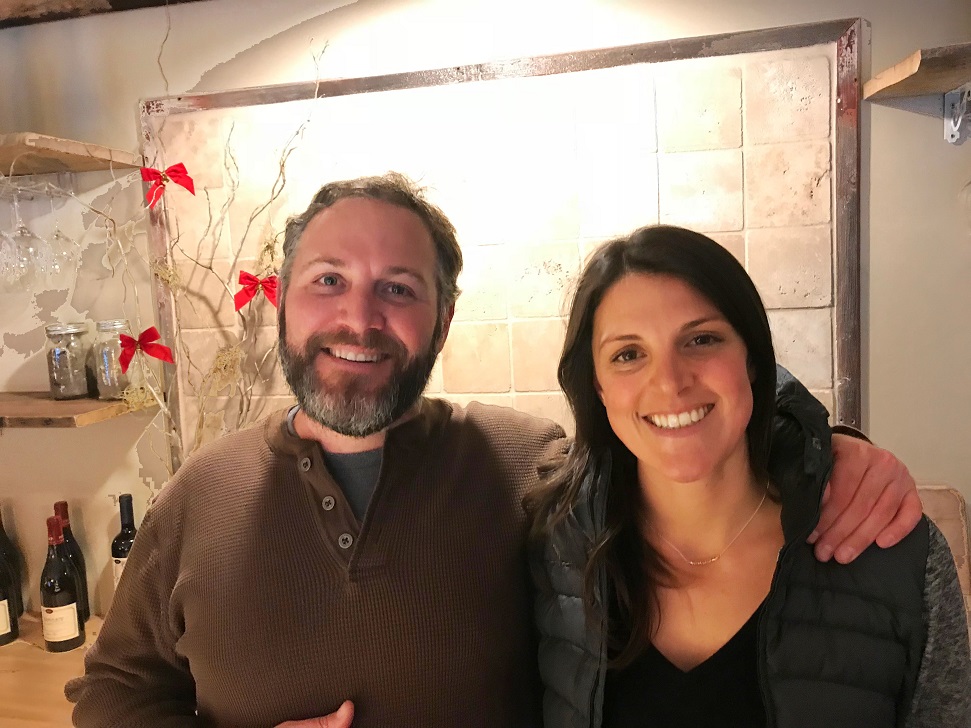
His name is pronounced Dev-let. His grandfather, Dewey Diran Deovletian, escaped Armenia in 1914 just before the Armenian genocide. In the early 1940s, struggling in his metal fabricating business and trying to look less foreign with the outbreak of war, he dropped the ian ending. It just so happens that the old farmer Ryan bought Baywood Ranch from is of Armenian stock too.

The Wines
| Wine | Blend | Description |
|---|---|---|
| Santa Barbara Chardonnay | Chardonnay | Ryan’s primary sources in the Santa Rita Hills are Zotovich Family and Sanford & Benedict Vineyards, and S&B represents roughly two-thirds of the blend of this wine while the remainder comes from the Zotovich Vineyard. Ferments, both spontaneous and inoculated, are initiated in steel and French oak barrels, and the wine is aged on its lees for some 15 months in Damy cooperage from France (both 228-liter and 400-liter barrels), 20% new. Part of the malo is blocked. Average production ~250 cases. Tech sheet here. |
| Sanford & Benedict Vineyard Chardonnay | Chardonnay | The iconic Santa Rita Hills’ vineyard on the south side of the appellation, just east of La Encantada. Elevations range from 200 to 350-feet, soils are calcium-rich clay with shale and chert, and the vineyard is some nine miles from the ocean. Production ranges from 125-150 cases. Ryan works with two blocks of Chardonnay: one planted 2006 with Wente clone (which tends to millerandage, or producing bunches with “hens & chicks,” thus ensuring good acidity); the other an original block planted in 1971 (possibly with plant stock descended from Paul Masson’s original vineyard, but no one knows anymore) on its own roots. Remarkably, there’s still no phylloxera. The base of the single-vineyard bottling is the old block, sometimes with a bit of juice from the younger block. This is aged on its lees for some 15 months in a mix of Damy 228L barrels, 400-liter demi-muids, and 1,000-liter foudre, 20% new. Tech sheet here. |
| Zotovich Vineyard Chardonnay | Chardonnay | North side of the Santa Rita Hills, some eight miles from the ocean, first planted in 1999. Generally 350-ft elevation with much more sandy soils than those on the south side. Ryan works with one block of Chardonnay (clone 76); the grapes are hand harvested. The wine is aged in 228L barrel and 300L cigar-shaped barrel, roughly 40% new, for 12 months and then blended to tank for four months before bottling. Tech sheet from the domaine for Vintage 2022 here. |
| La Encantada Vineyard Pinot Blanc | Pinot Blanc | A vineyard first planted by Richard Sanford in 2000 on land he deemed enchanting, hence the name. The site is on the south side of the appellation, immediately west of the Sanford & Benedict Vineyard, some seven miles from the ocean. Soils are loamy clay and elevations range from 200 to 750-feet. Average production ~150 cases. Ryan works with one block of Pinot Blanc growing at a lower, more shaded elevation. With the 2018 vintage, he began to age part of this wine in 500-liter sandstone clay jars (amphora), as well as steel barrels and one-year oak barrels. ML is blocked and after eight months of aging the wine is racked into steel assemblage tanks for another two months and then bottled. The appeal of the sandstone clay is its rate of porosity, affecting micro-oxidation during aging. Comparisons: Stainless steel: 0% Sandstone clay: 2% Oak barrels: 6% Terra cotta clay: 9% Tech sheet here. |
| Santa Barbara Pinot Noir | Pinot Noir | Sources are the La Encantada Vineyard, Sanford & Benedict Vineyard, and Zotovich Family Vineyard. The wine ferments spontaneously and sees around 15 months from a mix of French oak barrels, 25% new. Normally, this is bottled without fining or filtration. Average production ~350 cases. Tech sheet here. |
| La Encantada Pinot Noir | Pinot Noir | The windiest site of the three that Ryan works with in the appellation, making for thicker skins. The sources here are four blocks, four clones (Pommard, 115, 667, 777). Normally this is all de-stemmed and ferments are spontaneous. Aging is in Cadus and Chassin barrels for 16-18 months, 30-40% new. No fining or filtration. Production: ~150-175 cases. Tech sheet here. |
| Zotovich Family Vineyards Pinot Noir | Pinot Noir | North side of the Santa Rita Hills, some eight miles from the ocean, first planted in 1999. Generally 350-ft elevation with much more sandy soils than those on the south side. This is also the first site Ryan harvests. He works with one block of Chardonnay (clone 76) and two of Pinot Noir (clones 114 and 115), and the Pinot Noir sees ~30% whole cluster during fermentation for structure. Cooperage is different too: the barrels are made by Billon from Jura oak. Ferments for the Pinot are spontaneous, aging regiment is around 15 months in 228-liter barrels, 25% new. No fining or filtration. Production ranges from 125-150 cases. Tech sheet here. |
| Sanford & Benedict Vineyard Pinot Noir | Pinot Noir | Ryan works with two blocks of Pinot Noir, one planted in 2011 and the other an original block from 1971 (Martini clone). Aging is in Chassin barrels for 18 months, 33% new. No fining or filtration. Average production ranges from 150-175 cases. Tech sheet here. |
| Star Lane Vineyard, Happy Canyon, Santa Barbara | Cabernet Sauvignon | This hilltop block sits at 1200’ of elevation with little top soil, and gives fruit of great intensity and depth. The result is a Cabernet with classic flavors of blackberry, cassis, currant, hints of violet, olive tapenade, and savory herbs. There's restraint and freshness, a quintessential backbone of tannin, and tremendous length. Aged in terracotta and French oak, ~40% new for ~22 months. Alcohol: 13.0%. |
| "Sonny Boy" | Based on Merlot with Cabernet Sauvignon | The grapes, from Happy Canyon in Santa Barbara, are hand harvested and destemmed. The wine is aged for 16 months in 100% French oak (a mix of once filled and neutral 500L barrels) and 265L cigar-shaped terracotta, with the final six months in 500L sandstone amphora. Tech sheet from the domaine for Vintage 2021 here. |
| Ramato | Pinot Grigio | This is Ryan's take on ramato, the historic rendition of Pinot Grigio originating in Friuli and so named because "rame" refers to copper in Italian, ie, the color of the wine. The best description of Ryan's wine is his own: I was inspired and studied many producers when we began thinking about making the ramato. In the beginning, it was Gravner, Radikon, Damijan, and the skin macerated wines around Friuli, but the deepest influence came from Elisabetta Foradori with her Fuoripista. There's a wonderful book, Amber Revolution, written by Simon Woolf, that details skin macerated whites around the world and how producers approach the vinification. For ours, we have two different fermentations... 1) destemmed and fermented in our sandstone amphora and left on the skins for 8 months, 2) whole-cluster and 12 day cuvaison, then pressed to neutral 400L puncheons. After 8 months, we come off the skins and out of the amphora, then we blend with the wine in the puncheon. It's left in the tank for another 3 months to settle out any particulates, then we adjust the SO2 and bottle. I want both ends of the spectrum with freshness and texture.... bright, exotic fruit alongside some bitter, slight pithiness. It's a tug-of-war between floral notes, fruit notes, savory, and some minerality, petrichor. Super versatile and tremendously food friendly, in my opinion. Tech sheet here. |
